Accessories for outfits work best when they solve a small visual or practical problem. A belt can give a loose dress a waist, a bag can set the level of formality, and earrings can bring light near the face on a tired morning. None of those pieces need to announce themselves. Knowing how to accessorize outfits is mostly about deciding what the clothes need before reaching for every favorite item at once.
Choose one focal point before building around it
Start with the element you want people to notice first: sculptural earrings, a colored bag, a patterned scarf, or shoes with distinctive hardware. That focal point gives the rest of the accessories a limit. If the bag is bright red, earrings might be small gold hoops and the belt plain leather. If the jewelry is large and reflective, a quiet bag and clean neckline stop the outfit from splitting into competing highlights.
Use accessories to adjust proportion, not just decorate
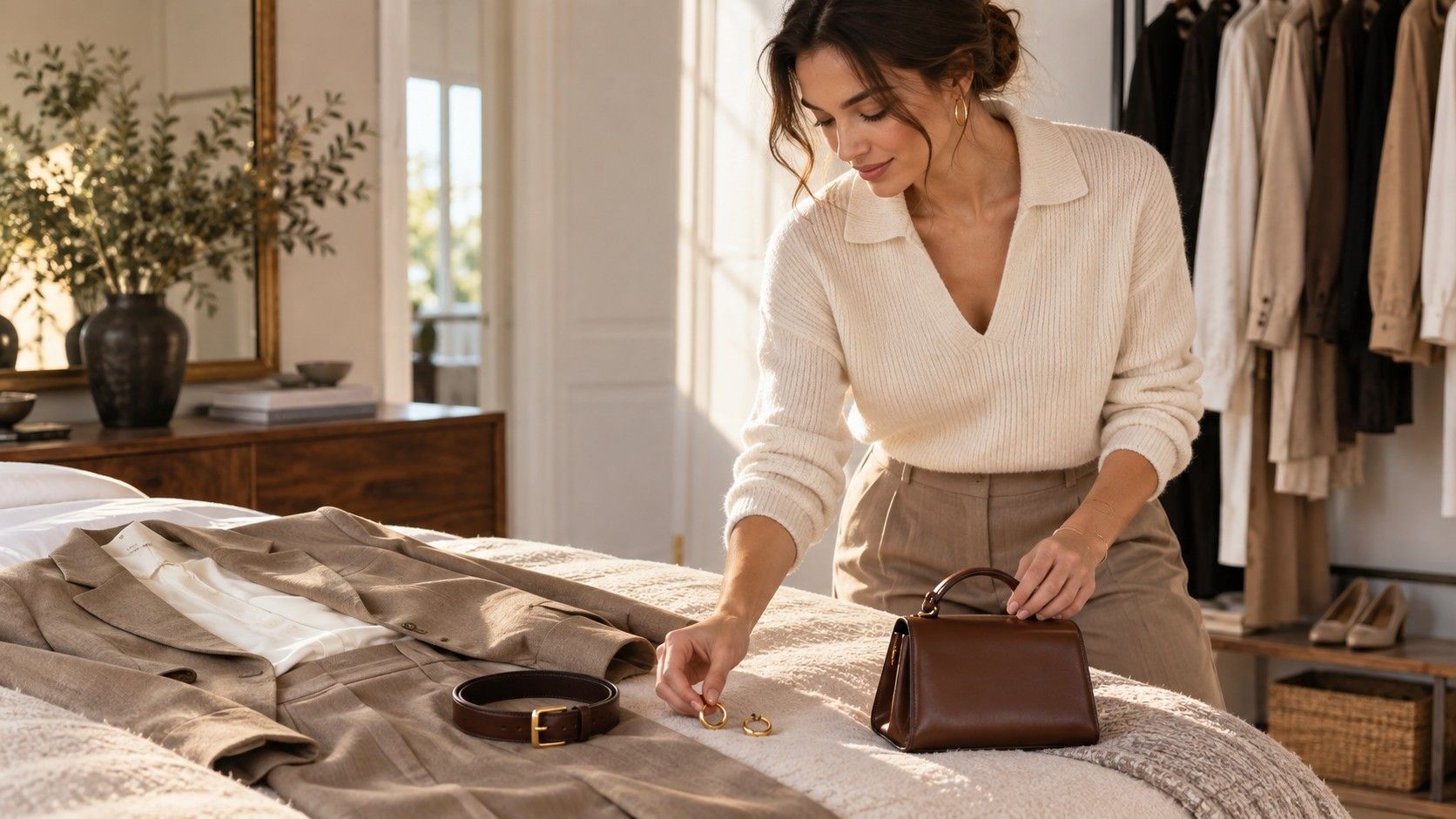
This is especially helpful with simple clothes. Jeans and a white shirt can carry a polished watch and a woven belt, or a silk scarf and small crossbody bag, but those combinations tell different stories. Lay the possible accessories beside the outfit rather than putting them all on immediately. The item that changes the silhouette or mood most is usually the focal point. Everything else should support it, not start a second conversation.
Match formality before trying to match every color
A belt is one of the clearest tools for proportion. A narrow belt near the natural waist can define a shirt dress; a wider belt may give a long cardigan more structure, but it can also visually shorten the torso. Try the belt with the outfit fully on and move it a few centimeters before deciding. The right placement is the one that lets you sit, eat, and breathe without constantly tugging at it.
Bags and shoes affect balance too. A tiny bag beside an oversized coat can look intentional because the scale contrasts; a medium structured bag may be more harmonious with tailored trousers. Chunky shoes can ground a floaty midi skirt, while a delicate sandal may make the same skirt feel lighter. These are not body rules. They are quick ways to see where volume sits. A mirror photo from a few steps away reveals the overall line more clearly than a close-up reflection.
When an outfit feels unfinished, the mismatch is often formality rather than color. A highly polished patent bag with worn canvas sneakers can work if the contrast is deliberate, but it needs another relaxed detail to make sense. Likewise, a casual cotton tote can undermine a sharp suit more than a bag in a different shade would. Look at finish, structure, and hardware: matte leather, soft fabric, polished metal, and visible logos all carry a social signal.
Color still matters, but it does not have to repeat exactly. Brown shoes can work with a black bag if the belt or jewelry provides a warm bridge. Silver hardware can echo grey frames or a watch. If nothing links the accessories, choose one neutral family for the practical pieces and let one item bring contrast. This is a calmer way to complete an outfit than hunting for a perfect shade match that may not exist.
Make everyday jewelry earn its place
The best everyday jewelry is comfortable enough to disappear physically while still doing useful visual work. Small hoops, a slim chain, a signet ring, or a watch can give a plain knit some finish without changing how you move through the day. Consider friction points honestly: bracelets that catch on a laptop, rings that make hand cream messy, or heavy earrings that ache by lunch are not versatile accessories, however good they look in a mirror.
Jewelry also responds to neckline and hair. A crew neck often suits a short necklace or earrings; an open collar leaves room for a pendant. If your hair is loose and textured, very delicate earrings may vanish, while a small defined shape can still show. You do not need matching sets. Repeating a metal tone once or twice is enough. Mixing metals can look natural when the pieces have a shared simplicity rather than a competing level of sparkle.
Edit the outfit at the door
The final edit is where accessories become useful instead of excessive. Put on everything you planned, then remove one item and compare. If the outfit looks clearer, leave that item behind. If it feels bare, add back the piece that has a function: warmth, carrying capacity, a waist definition, or a focal point. This small routine is more dependable than a rule about a fixed number of accessories.
Keep a tray or hook near the door for the pieces you actually use: sunglasses, a dependable belt, a daily bag, and jewelry that works with most necklines. It reduces rushed choices and makes repetition easier to see. Over a few weeks you will notice which accessories complete an outfit and which only create clutter. The useful collection is usually smaller than expected, but every piece has a reason to be there.
Season changes can make the same accessory collection work harder. In summer, sunglasses, a light scarf, and a textured bag may be enough; in winter, gloves, a hat, and a larger bag create more visual weight. Check that the materials agree with the clothes. Raffia can look out of place beside a heavy wool coat, while a smooth leather bag may make a linen outfit feel unexpectedly formal. Matching weight is often more effective than matching color.
It helps to distinguish a signature from a habit. A signature accessory adds a recognizable note because you choose it deliberately: perhaps a watch, a scarf knot, or a pair of earrings. A habit is an item you put on even when it fights the outfit. Review that difference occasionally. You can keep favorite pieces without letting them become automatic clutter, and the outfits that remain will usually feel more like you.
Before buying a new detail, try the outfit with what you own in three different ways. A belt moved higher, a bag carried by hand, or sleeves pushed back can change the result more than another purchase. The best accessories often reveal themselves through repeated use, not a dramatic first impression.