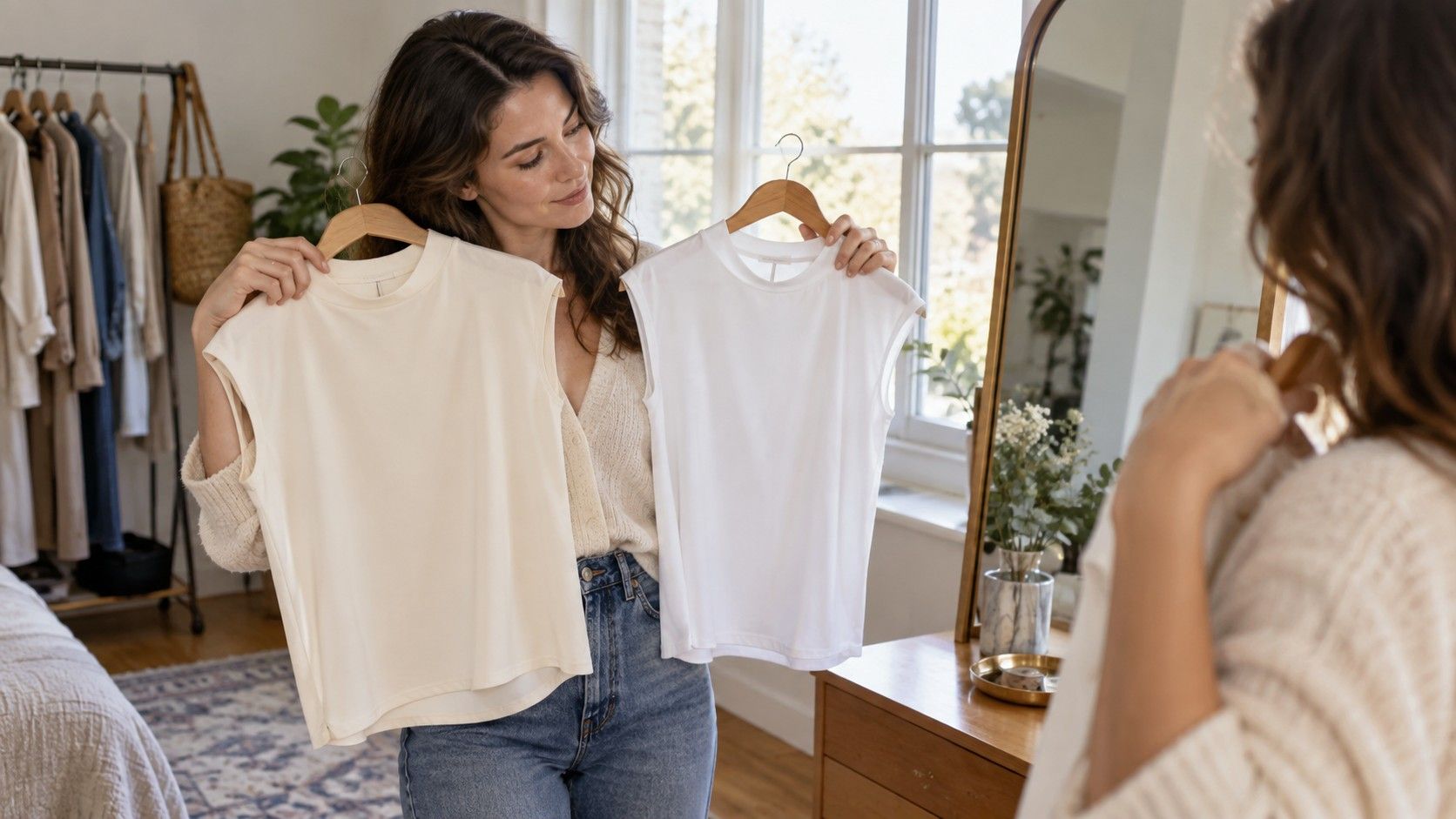
A capsule wardrobe for beginners is not a contest to own the fewest things or to dress in beige forever. It is a smaller group of clothes that can meet repeatedly without requiring a styling rescue each morning. The useful version starts with your life as it is: the commute, the laundry basket, the temperature changes, and the days when you need an outfit in five minutes.
Start with the week you actually live
Before removing a single hanger, write down the situations your clothes need to cover in a normal two-week stretch. Include work, home, errands, dinners, exercise, weather changes, and the one occasion that regularly catches you out. Many people build a capsule around an imagined life of gallery openings and then discover they still have no comfortable outfit for a wet school run or a long train ride.
Choose a base palette that can survive laundry day
Count how often each situation happens. If you work from home four days a week, three crisp blazers are not automatically core pieces, however good they look in a mood board. If you walk twenty minutes to the station, shoes that only survive a taxi journey cannot carry the wardrobe. A useful capsule lets the most common days take up the most space. The occasional event can be handled by one adaptable outfit rather than an entire category of seldom-worn clothes.
Find core pieces by making outfits, not a shopping list
Pick two or three base neutrals from the things you already wear most: perhaps navy, ecru, denim, charcoal, olive, chocolate, or black. Test them together in the mirror, including shoes and outerwear. The goal is not a fashionable color theory; it is compatibility. A navy trouser, cream knit, medium-wash jean, and tan shoe already offer more combinations than four unrelated statement pieces.
Add two accent colors only after the base is clear. They should work with at least two of the neutrals and appear in more than one place if possible. For example, muted red might show up in a cardigan and scarf, while pale blue appears in a shirt and stripe. This makes repeat outfits feel intentional rather than repetitive. A capsule wardrobe becomes fragile when every colorful piece needs a special companion that is usually in the wash.
Minimal wardrobe essentials are often presented as a universal checklist: white shirt, trench coat, black trousers, perfect jeans. In reality, a piece is essential only if it earns its place in your own combinations. Lay out a top, bottom, layer, and shoe, then build five outfits around each possible candidate. If a striped tee works with jeans, tailored trousers, a skirt, a cardigan, and a jacket, it has evidence. If a beautiful skirt needs one precise top and unsuitable weather, it may be a specialist rather than a core piece.
Fit matters more than the category. One pair of trousers that sits comfortably at the waist and works with your regular shoes is more valuable than three theoretically versatile pairs that need alteration or a particular bra. Check pieces while sitting, walking, reaching, and carrying your usual bag. The clothes that survive those small movements are the ones you will reach for when you are late, tired, or simply not interested in negotiating with your wardrobe.
Build a realistic ratio of tops, bottoms, layers, and shoes
Most beginners need more washable tops than bottoms because tops meet skin, food, weather, and life more directly. A compact start might include six to eight tops, three to five bottoms, two or three warm layers, one reliable outerwear option, and two or three pairs of shoes. The exact number is less important than the rotation. If your laundry routine is weekly, your capsule needs enough tops to get through it without turning every outfit into an emergency.
Shoes quietly decide whether a capsule works. Choose pairs that match the hem lengths and formality of your bottoms: a clean sneaker, a weather-ready boot or loafer, and perhaps a more polished shoe for your actual social life. Try them with trousers and jeans before removing labels. Outerwear deserves the same treatment. A coat may be beautiful alone but useless if it fights with every bag, boot, and knit underneath it.
Watch for the shopping trap that makes capsules fail
The usual mistake is treating the project as permission to replace everything. New items share a store's lighting and marketing story, but they do not automatically share your closet. Pause before buying and ask which exact outfit the item completes. If the answer is vague, photograph the proposed combination with what you own or leave it for 24 hours. The most useful purchases solve a visible gap, such as a washable long-sleeve top that works under two jackets.
Another trap is buying duplicates of an aspirational version of yourself. A capsule should make personal style easier to practice, not punish you for preferring comfort, color, or soft fabrics. Keep the flattering knit you wear twice a week if it is in good condition. The goal is enough variety to feel like yourself, with less waste and fewer stranded pieces. It is reasonable for a capsule to change with your job, climate, body, or taste.
Test the capsule before making final decisions
Wear the proposed group for two weeks before donating, storing, or replacing everything else. Take quick photos of outfits that feel easy and note the pieces you avoided. The pattern is more useful than a tidy rail. Perhaps you need another lightweight layer because your office is cold, or perhaps one pair of shoes limits half the outfits. Fix those practical gaps first.
At the end of the test, make a short list: keep, repair, tailor, replace, and reconsider. You are learning how to build a capsule wardrobe through use, not through a perfect first edit. A wardrobe that works has room for repeated uniforms, a favorite odd color, and the occasional piece that only earns its place on a good Saturday. The measure is whether getting dressed has become calmer and more reliable.
| Wardrobe area | Beginner-friendly starting point | Practical check |
|---|---|---|
| Tops | 6–8 washable options | Can you make it to laundry day comfortably? |
| Bottoms | 3–5 different shapes or uses | Does each one work with at least three tops? |
| Layers | 2–3 cardigans, knits, or jackets | Can they fit over your common sleeves? |
| Shoes | 2–3 daily pairs | Do they suit your walking and weather needs? |