Outfit proportions are often discussed as if there were a correct formula for every body. In practice, the useful question is simpler: where do you want an outfit to feel defined, relaxed, longer, shorter, lighter, or more grounded? Small changes in waistband height, hem length, shoe shape, and outerwear can alter that feeling without asking you to replace your wardrobe or turn getting dressed into a geometry lesson.
Start with observation, not a body category
The most useful way to dress for your body proportions is to notice where clothing sits rather than to assign yourself a fixed shape label. Labels can be entertaining, but they often make people search for flaws that were not bothering them until a chart suggested they should. Stand in clothes you already like and look at the relationship between shoulder, waist, hip, torso, and leg line. Which garments make you feel able to move and which make you keep adjusting them? That is better information than a category with a dramatic name.
Find the lines that make an outfit feel settled
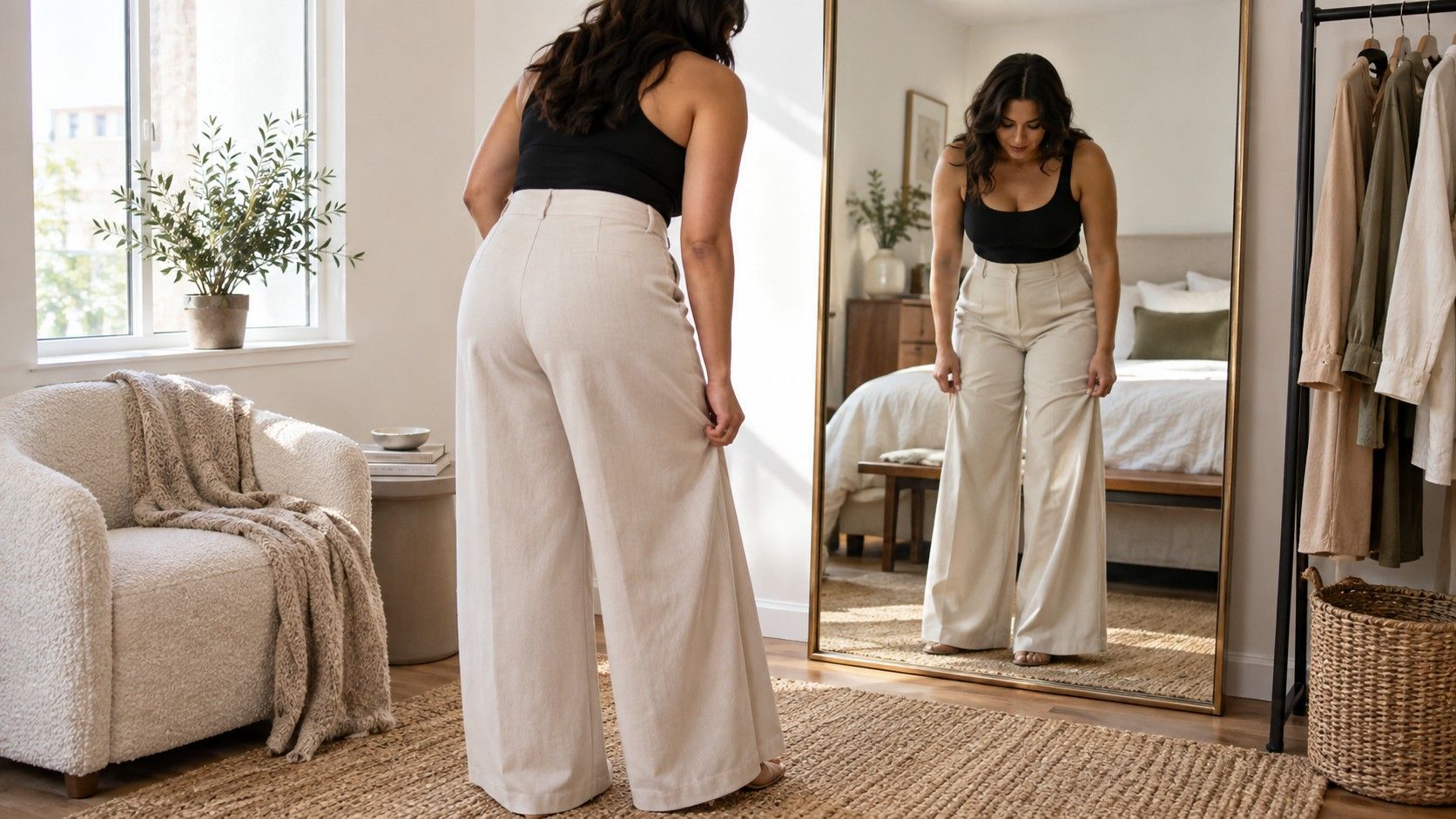
Take photos in daylight from the front and side, using the same shoes. A mirror changes with posture; a photograph shows whether a waistband, hem, or jacket length is interrupting the line in a way you dislike. The goal is not to make every body look the same. It is to understand why one familiar pair of trousers feels easy while another, very similar pair, stays at the back of the wardrobe. Fit and proportion are practical tools, not a correction project.
Use waistlines and hems as adjustable tools
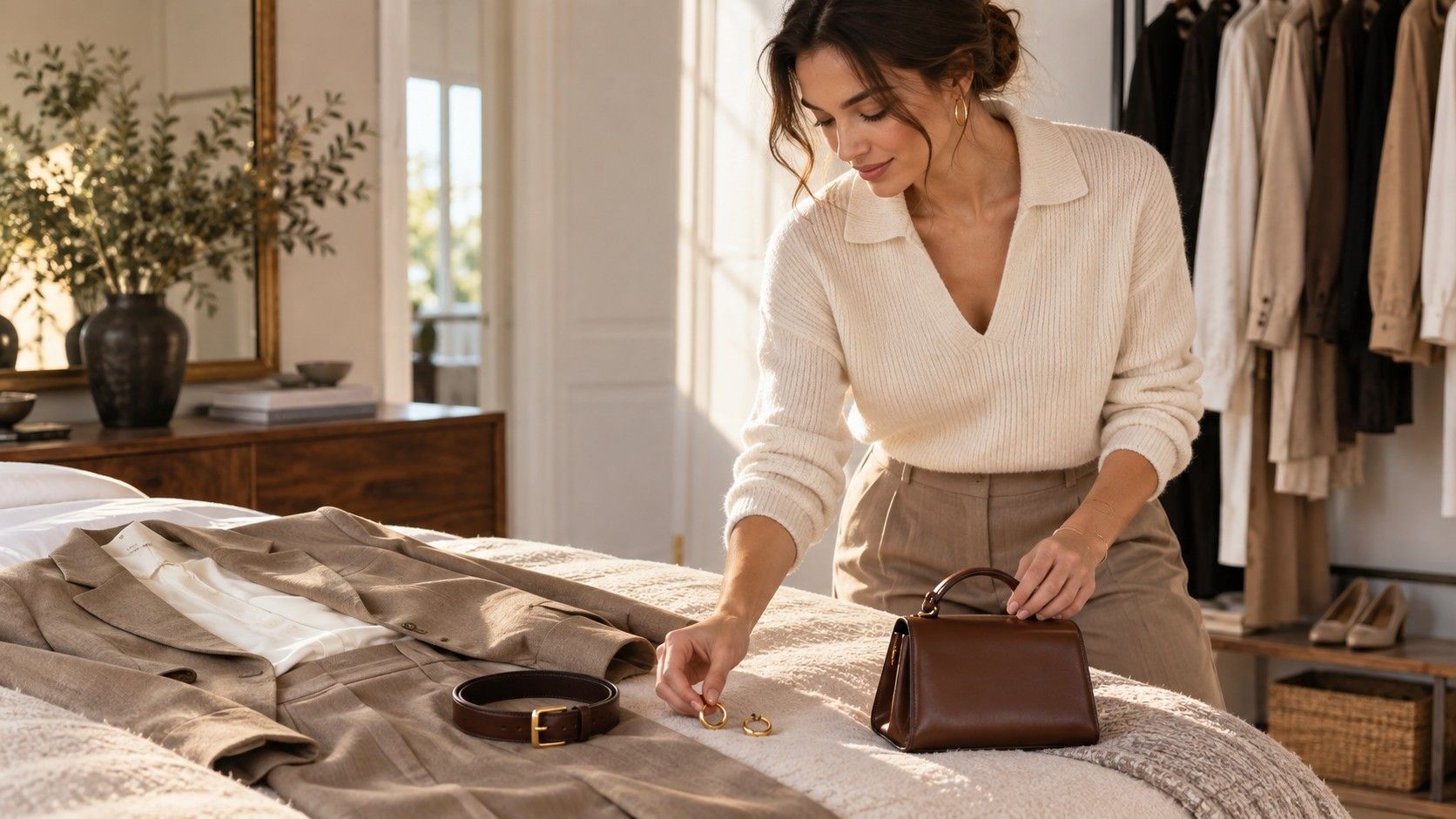
Every outfit creates horizontal and vertical lines. A waistband, jacket hem, boot top, cuff, or colour change can make the eye pause. If a top ends at the widest point of your hip and feels awkward, try tucking it, choosing a slightly shorter version, or letting it extend clearly past that point. The change is not about hiding anything; it gives the garment a more intentional destination. The same applies to cropped jackets, long cardigans, and wide belts.
Vertical lines can come from an open shirt, a coat worn unbuttoned, a long scarf, or trousers that fall cleanly to the shoe. They are useful when an outfit feels visually chopped into pieces, but they are not mandatory. Some people prefer a strong waistline or a shorter jacket, and those choices can feel equally balanced. Test the line while walking and sitting. A flattering outline that needs constant rearranging is not a useful one for an ordinary day.
A waistline is one of the easiest variables to change. High-rise trousers can lengthen the leg line when paired with a tucked or shorter top; mid-rise styles can feel more relaxed with a shirt left open over a fitted base. Neither is inherently better. What matters is whether the rise sits comfortably when you sit down and whether it works with the tops you actually own. Do not buy trousers for a theoretical silhouette if the waistband pinches by lunchtime.
Hem length changes the conversation just as much. A midi skirt can look different with ankle boots, loafers, or a bare ankle; cropped trousers can either feel crisp or make a shoe look isolated. Try the same garment with two shoe shapes before deciding it does not suit you. Often the issue is not your body or the trouser but the amount of space between hem and shoe. A simple adjustment, a different sock, or a cleaner break can resolve it.
Balance volume instead of fighting it
Volume needs company, not punishment. Wide-leg trousers can work beautifully with a close-fitting knit, but they can also work with a relaxed shirt if you define the waist or let a shorter jacket create a boundary. An oversized blazer does not demand skinny trousers; straight denim or a column skirt can give it enough structure. The more useful question is where the outfit has shape and where it has ease. If every item is loose and similar in weight, the result may feel heavy simply because no line is visible.
Fabric helps control the effect. Fluid wide trousers behave differently from stiff denim, and a fine knit under a broad coat creates less bulk than a thick sweatshirt. Hold a garment at the shoulder and waist before buying it; the drape tells you whether it will skim, stand away, or collapse. Comfortable clothes do not have to be shapeless. A good fit leaves room for breathing and movement while still giving the eye a few deliberate landmarks.
Build a personal set of reliable proportions
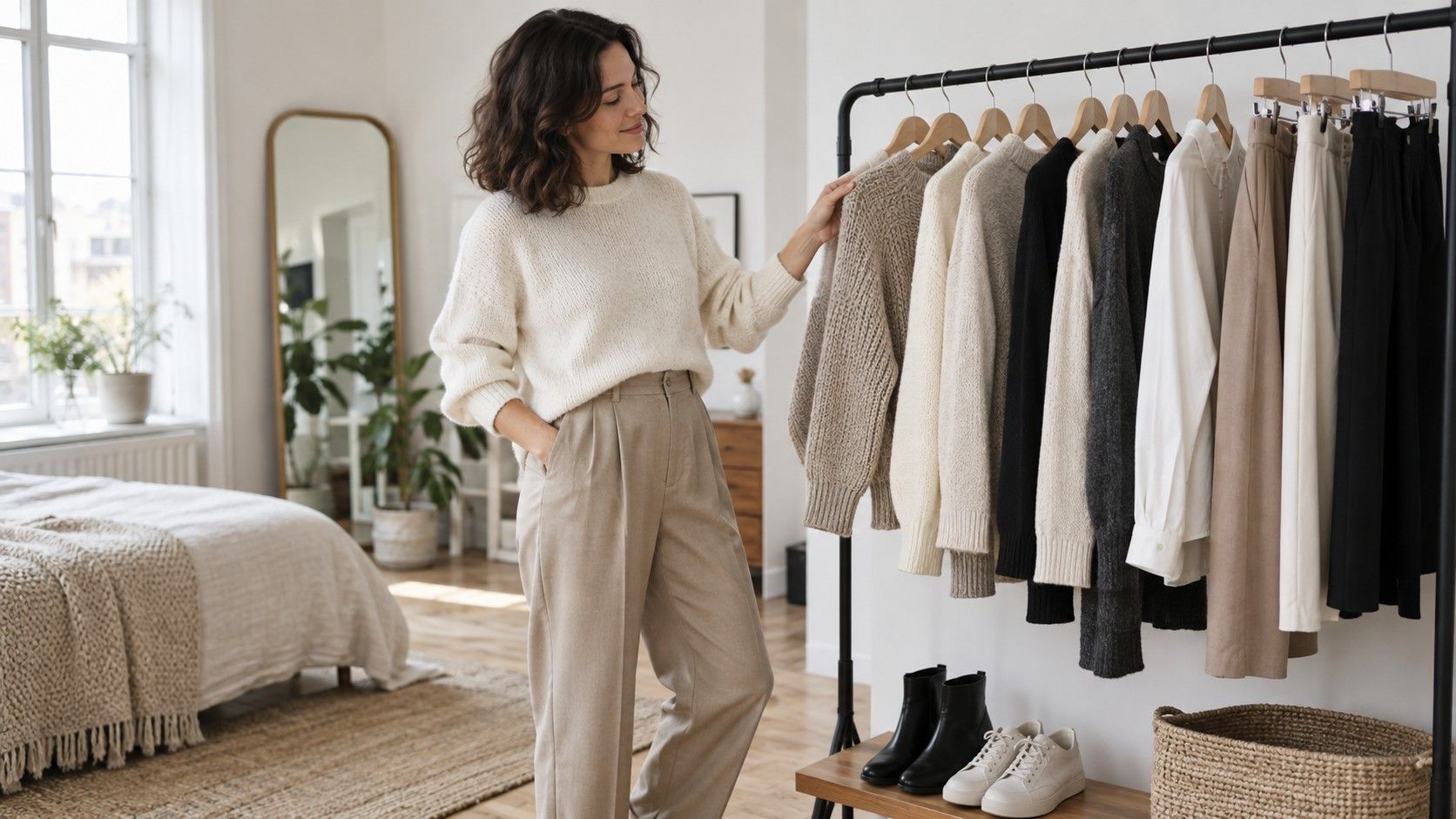
Instead of memorising rules, collect the combinations that make you feel steady. Maybe that is high-rise straight trousers with a fine knit, a midi skirt with a cropped cardigan, relaxed jeans with a tucked T-shirt and open overshirt, or a column dress under a long coat. Photograph them after a real day, not only in the first five minutes. Notice which proportions remain comfortable after travel, a meal, rain, or a long meeting. That is the test fashion diagrams cannot provide.
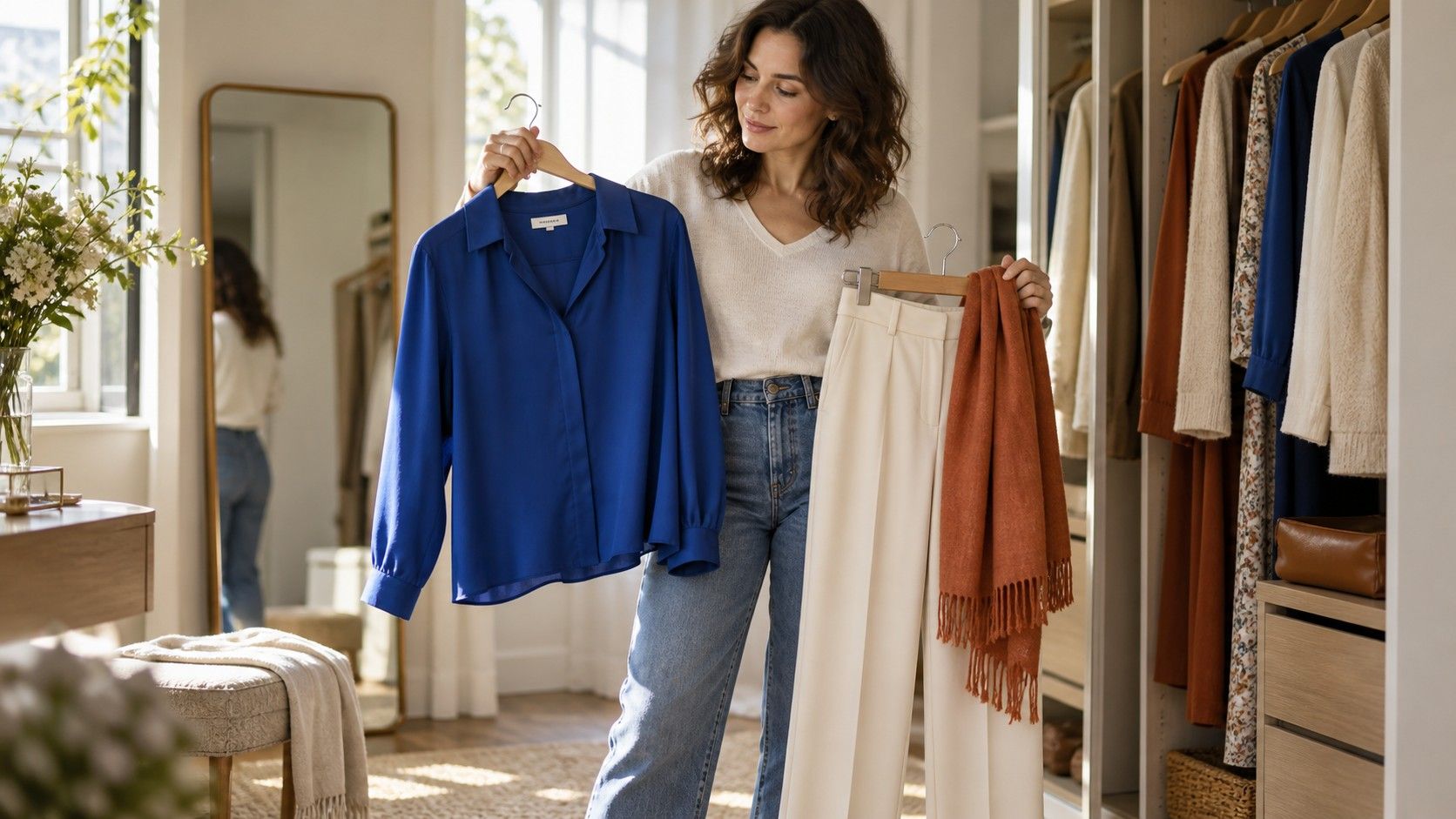
Keep the experiments small. Change one part of a familiar outfit: shorten the top with a tuck, swap a bulky shoe for a slimmer one, add a belt, or try a jacket that ends at a different point. You will quickly see whether the change gives more ease or merely follows a rule you do not enjoy. Body proportions clothing is most useful when it offers choices. The clothes should support your life and your taste, rather than requiring you to perform for a silhouette.
| If the outfit feels... | Try adjusting... | Check in real life |
|---|---|---|
| Visually cut in half | Waistline or top length | Walk and sit, not just stand |
| Too heavy | One fabric weight or shoe shape | Look at the side view |
| Too plain | A jacket, belt, or open layer | Keep comfort at the centre |
The best proportion is the one that lets you forget about your clothes once you leave home. Learn the effects of your favourite pieces, keep the combinations that survive a normal day, and ignore any rule that makes you feel less like yourself. That gives you a durable sense of outfit balance without treating your body as a problem to solve.
Season, footwear, and fabric will change the result, so revisit the combinations instead of treating a good outfit as a permanent formula. A coat can change the apparent length of a dress; thick socks can change the relationship between trouser and boot; a softer knit can make a familiar shape feel completely different. Curiosity is more useful than perfection. Once you notice the levers you can move, getting dressed becomes a series of small, reversible choices rather than a verdict on your proportions.