Layering is less about wearing more clothes than knowing what each piece is doing. A good layered outfit lets you walk through a cold morning, sit comfortably indoors, and still look like yourself when the coat comes off. The bulky versions usually fail because every garment is equally heavy or because the outline has been ignored. Start with light layers, clear proportions, and a realistic view of where the day will take you.
Give every layer a clear job
Layering works when every piece solves a specific problem. The base layer sits comfortably against the skin, the middle layer adds warmth or colour, and the outer layer protects against weather. Trouble starts when three pieces are all doing the same vague job of “being cosy.” A thick sweatshirt under a padded coat may feel safe at the door but becomes exhausting in a heated shop or train. Decide whether you need insulation, wind protection, rain protection, or simply a sharper outline, then choose one garment for each role.
Start with the thinnest layer
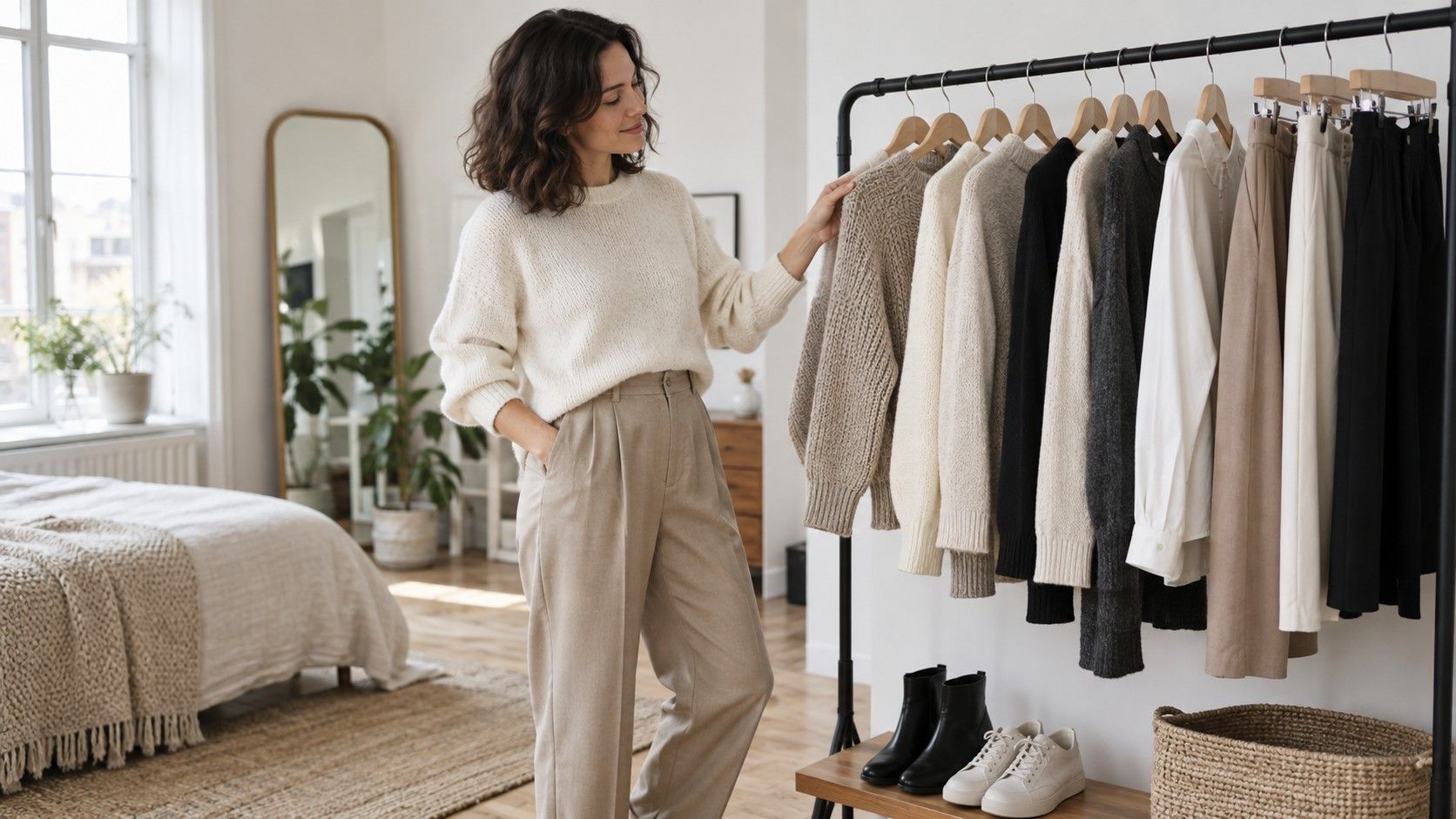
A useful outfit can change temperature without being rebuilt. A cotton tee, fine knit, and unstructured coat work because each can be removed without leaving the others looking unfinished. An open shirt can be a light middle layer; a cardigan can be the indoor layer; a scarf can warm the neck without adding bulk to the torso. This is the practical answer to how to layer clothes stylishly: use fewer pieces, and make each one earn its place.
Use lengths to create shape
Begin close to the body with something smooth enough to move under other fabrics. A fitted T-shirt, thin merino knit, camisole, or long-sleeve jersey keeps the next layer from catching and bunching. Check the sleeves and neckline: a bulky cuff under a jacket, or three collars visible at once, can make a calm outfit feel accidental. The base does not have to be tight, but it should lie flat enough that you can forget it is there.
Weight matters more than the number of garments. Fine wool and cotton poplin often give more useful warmth than a thick synthetic fleece. If you need serious insulation, choose a warm outer layer and keep what is underneath simple. This lets you take the coat off at lunch without looking as though half the outfit has disappeared. Before leaving, sit down and reach forward; pulling at the shoulders reveals layering problems faster than a mirror does.
Hem lengths keep layers readable. Let a shirt show slightly below a shorter knit, wear a cropped jacket over higher-waisted trousers, or use a longer coat to frame a simple inner outfit. These small changes create vertical rhythm and protect the waistline from disappearing. When every hem ends at the same point, the middle of the body can look like one thick band, especially with dark knitwear.
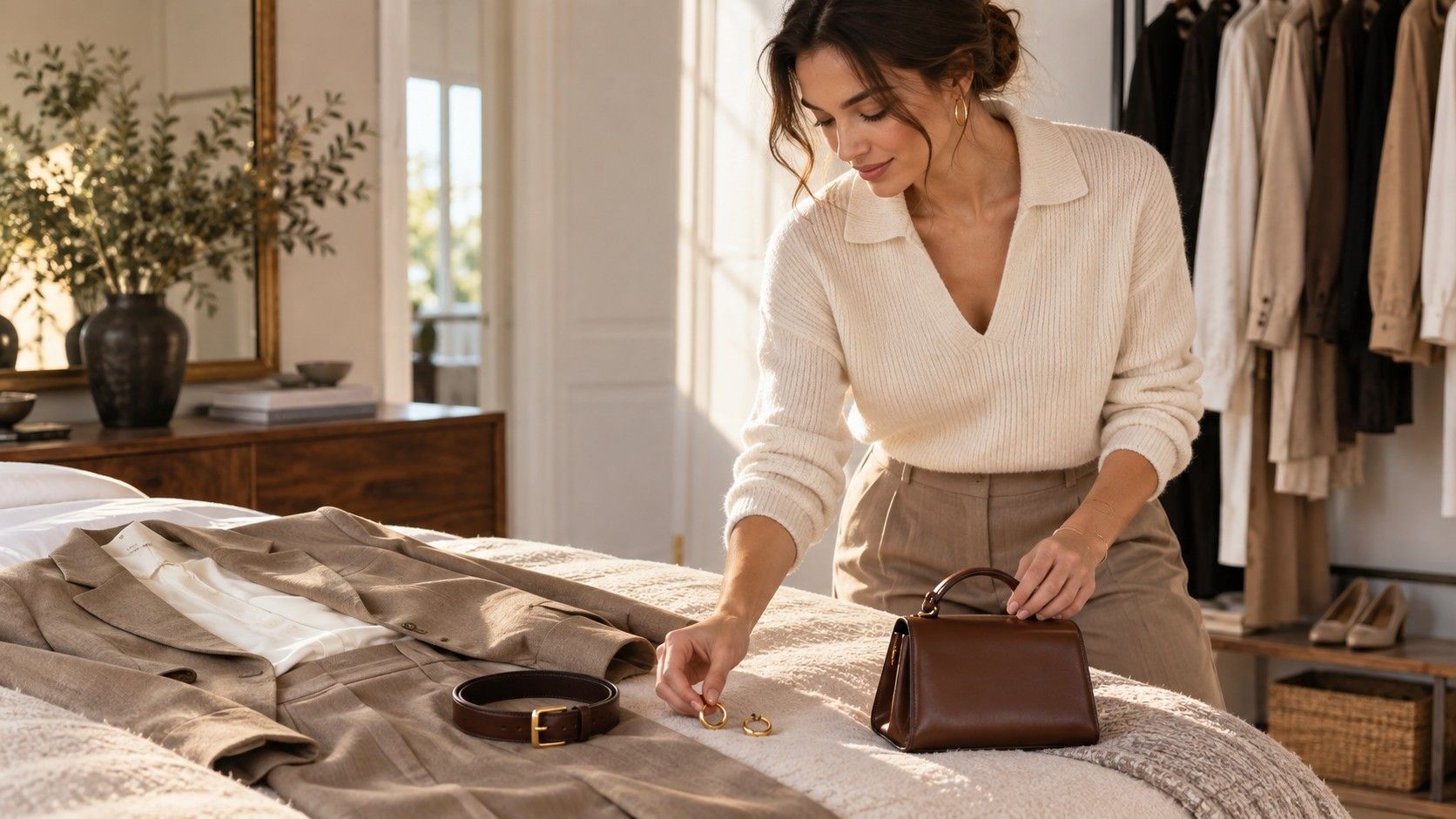
There is no need to expose skin to create proportion. A belt over a cardigan, a defined trouser waistband, or a shorter jacket can establish a centre without adding another colour. Check the side view as well as the front. Long cardigans, oversized shackets, and tunic-length knits can all be useful, but they need a slimmer element somewhere else, such as straight trousers or a close-fitting base layer.
Manage warmth without bulk
The secret to warm layering outfits is trapped air, not a pile of heavy garments. A fine thermal base, light knit, and wool coat may feel warmer and look cleaner than two thick jumpers under a parka. Choose fabrics that slide rather than grip: a cotton shirt under a wool knit moves better than a fuzzy fleece under another fuzzy layer. Avoid stacking bulky hoods, large collars, and thick sleeves in the same area.
Accessories can do targeted work. A scarf, gloves, wool socks, and a hat add warmth at the edges of the body, where cold is felt quickly, without inflating the torso. Keep a compact layer in a bag for buildings with aggressive air conditioning. This is more useful than wearing a coat indoors all day and wondering why the outfit feels awkward. Temperature control should feel quiet, not heroic.
Layer for changing temperatures
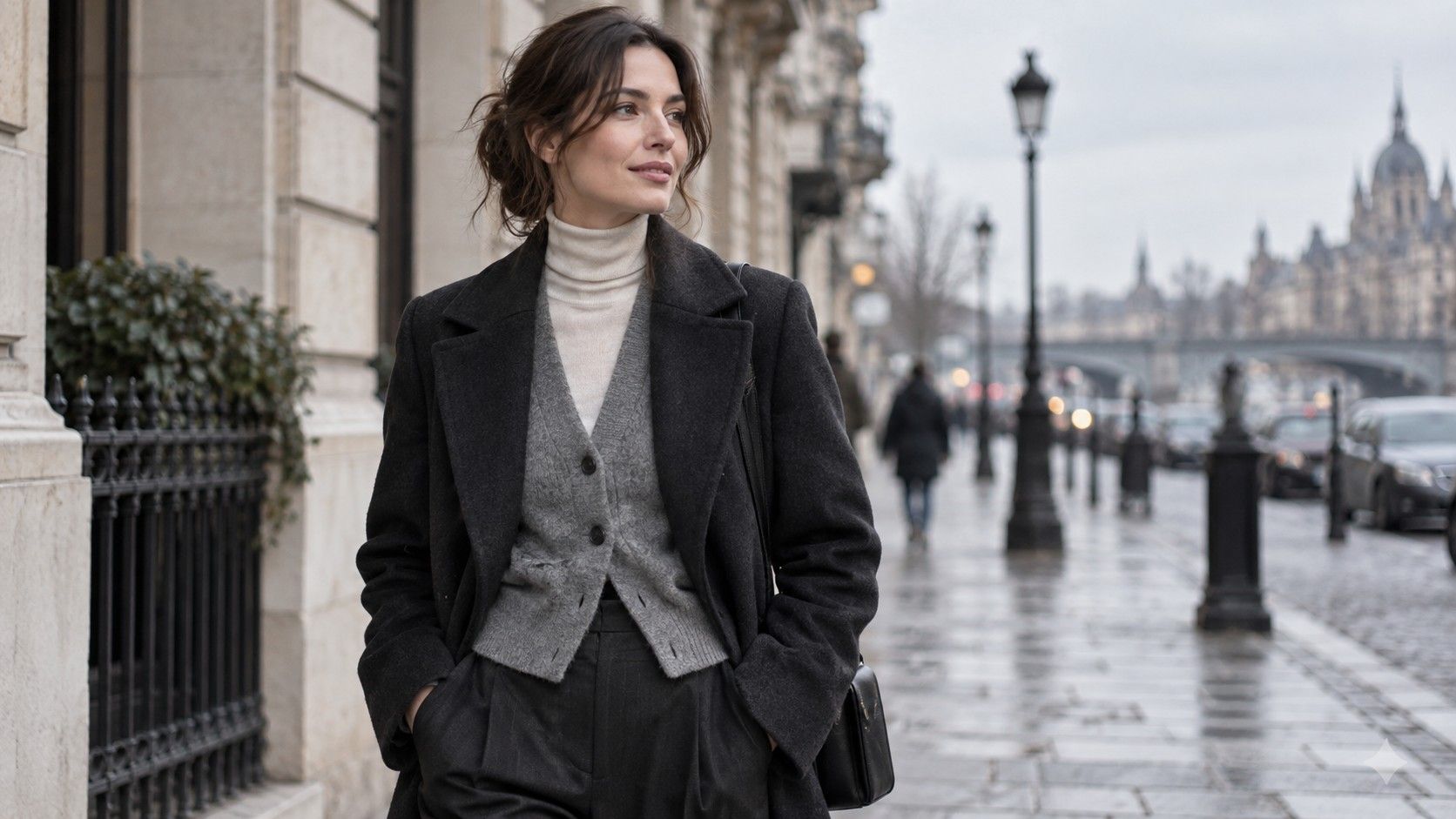
Think through the whole route: a cold walk, warm transport, an office, a late return, and possible rain. The right outerwear is the one you can carry or pack once conditions change. A trench or light waterproof shell works over knitwear in wet mild weather; a wool coat works for cold dry days; an insulated vest can add warmth while leaving the arms free. Match the outer layer to the forecast, not to a single dramatic moment.
Keep a few proven combinations in mind for rushed mornings. For example, a tee, cardigan, trousers, and coat; a fine knit, overshirt, jeans, and weather jacket; or a shirt, blazer, and scarf with straight trousers. Photograph combinations that feel right after a full day. Learning how to layer clothes becomes easier when you rely on evidence from your real schedule rather than rules that only work in an editorial photograph.
Once you have two or three combinations that work, repeat them with different colours and textures. Layering becomes much easier when it is a reliable system rather than a last-minute attempt to solve winter with everything you own.
It is worth checking the small friction points before they become reasons to abandon an outfit. Can you move your arms freely in the middle layer? Does the coat close over the knit without pulling at the shoulders? Will the shirt cuff sit comfortably under the jacket, and are the pockets still usable? These questions sound dull, but they separate clothes chosen for a photograph from clothes that work through a normal day. If a combination catches, rides up, or makes you too warm after ten minutes indoors, simplify it. Removing one layer is often a better answer than replacing everything.
Colour can help the layers look connected. Keep the base neutral and repeat one tone in the knit, scarf, shoe, or outerwear, or use adjacent shades such as cream, camel, and chocolate. A dark base with a lighter middle layer can also make the outfit feel more open around the face. Avoid adding contrast at every level: a patterned shirt, bright knit, checked coat, and colourful scarf compete rather than layer. Let one piece have visual energy and keep the others calm. This makes it easier to put a jacket down, tie it around your waist, or change footwear without losing the sense that the outfit belongs together.
Finally, let the weather set the limit. On a dry autumn day, a long-sleeve top, light knit, and coat may be enough. In real cold, add thermal underwear or choose a more insulating outer layer rather than endlessly stacking sweaters. Good layering should create comfort and flexibility, not prove endurance. When your clothes adapt easily between pavement, transport, and indoors, they stop being a problem to solve and become part of a day that can move naturally.