Monochromatic outfits can look calm and expensive, or oddly flat and unfinished. The difference is rarely the price of the clothes. A one color outfit needs shifts in shade, texture, and shape because it cannot rely on a contrasting top to create an obvious outline. That is good news if getting dressed feels noisy: tonal dressing gives you a useful framework. It asks fewer colour questions while leaving plenty of room for personality.
Choose a colour family, not one exact paint chip
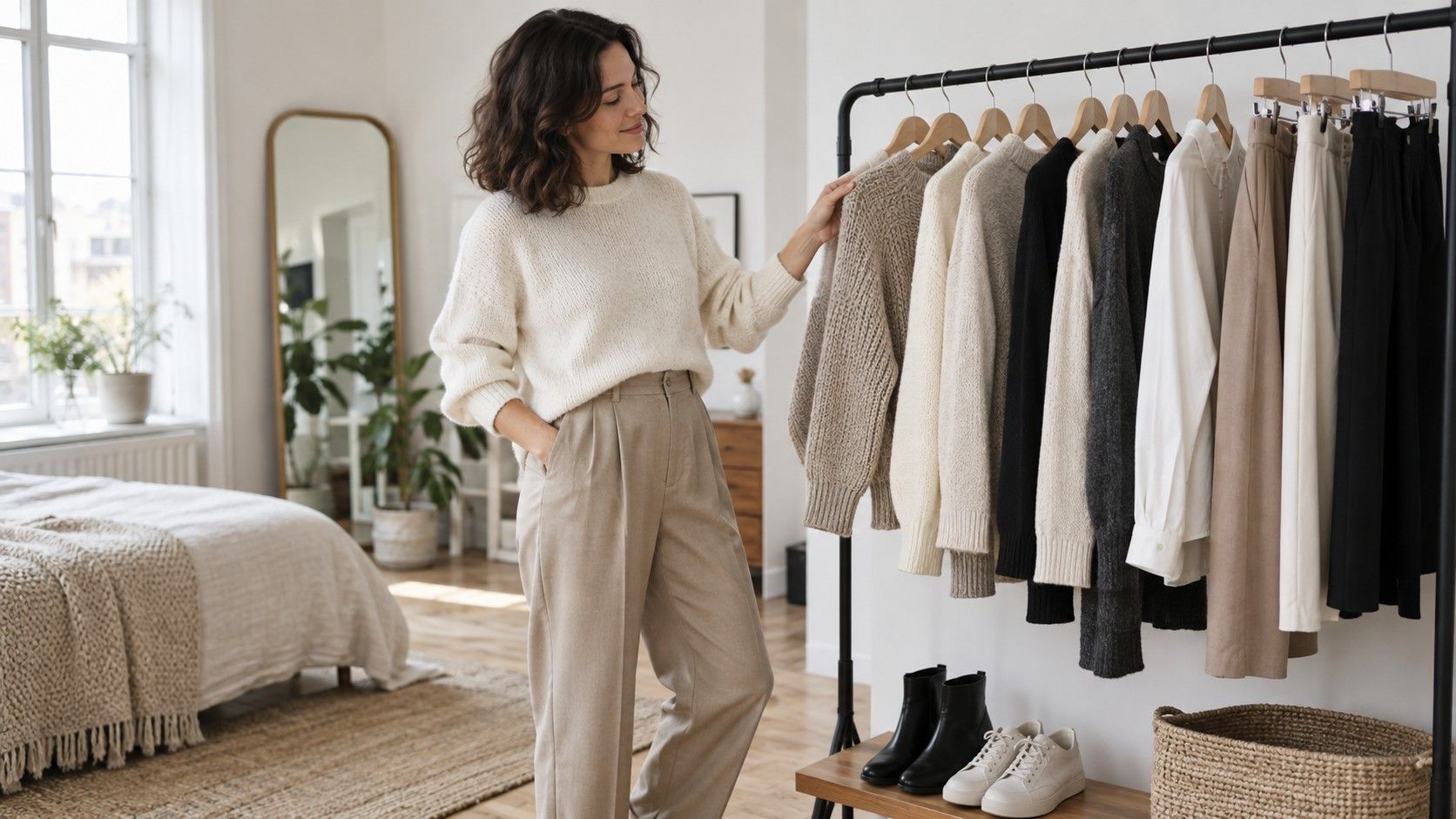
Think in families: cream with oatmeal and camel, navy with ink and faded denim, chocolate with warm brown, or grey with soft silver and charcoal. Repeating an identical shade from head to toe can work, but it is harder than it looks because fabrics reflect light differently. A navy wool trouser and navy cotton shirt may appear unrelated in daylight. A small value shift makes the combination feel deliberate rather than like a laundry accident.
Build depth with texture instead of extra colour
Begin with colours already present in your wardrobe. Navy is forgiving because denim, knitwear, and tailored pieces all come in nearby depths. Cream can feel fresh but needs an honest check for transparency and stains. Black is easy to assemble but benefits from a visible difference between matte cotton, leather, and knit. Photograph the outfit by a window before deciding it works. Bathroom lighting is too generous to colours that disappear outdoors.
Use fit to keep a single-colour look alive
Texture gives tonal dressing a pulse. Pair smooth denim with a ribbed knit, poplin shirt, suede shoe, brushed wool coat, or linen-blend trouser. When all the surfaces are equally flat, one colour can read like a uniform. You do not need five textures at once; two or three are enough. A cream cotton T-shirt, chunky cardigan, and corduroy trouser have clear differences even when their shades are close.
Pay attention to shine. A satin skirt next to a glossy synthetic blouse can make a monochrome look more evening-focused than intended. For daytime, keep most surfaces matte and use a small reflective detail such as earrings, a watch, or a buckle. In winter, wool and leather naturally create variation. In summer, cotton, linen, and a woven bag can do the same job without making you feel overdressed for the weather.
When colour does not divide the body, proportion becomes more visible. A tucked or half-tucked top can establish a waistline; a cropped jacket can do it without exposing skin. Wide trousers work well with a closer-fitting knit, while a full skirt often benefits from a shorter top or a defined belt. There is no universal flattering formula, but there should be a reason the upper and lower halves relate. If both pieces are oversized and similar in weight, the outfit may lose its shape.
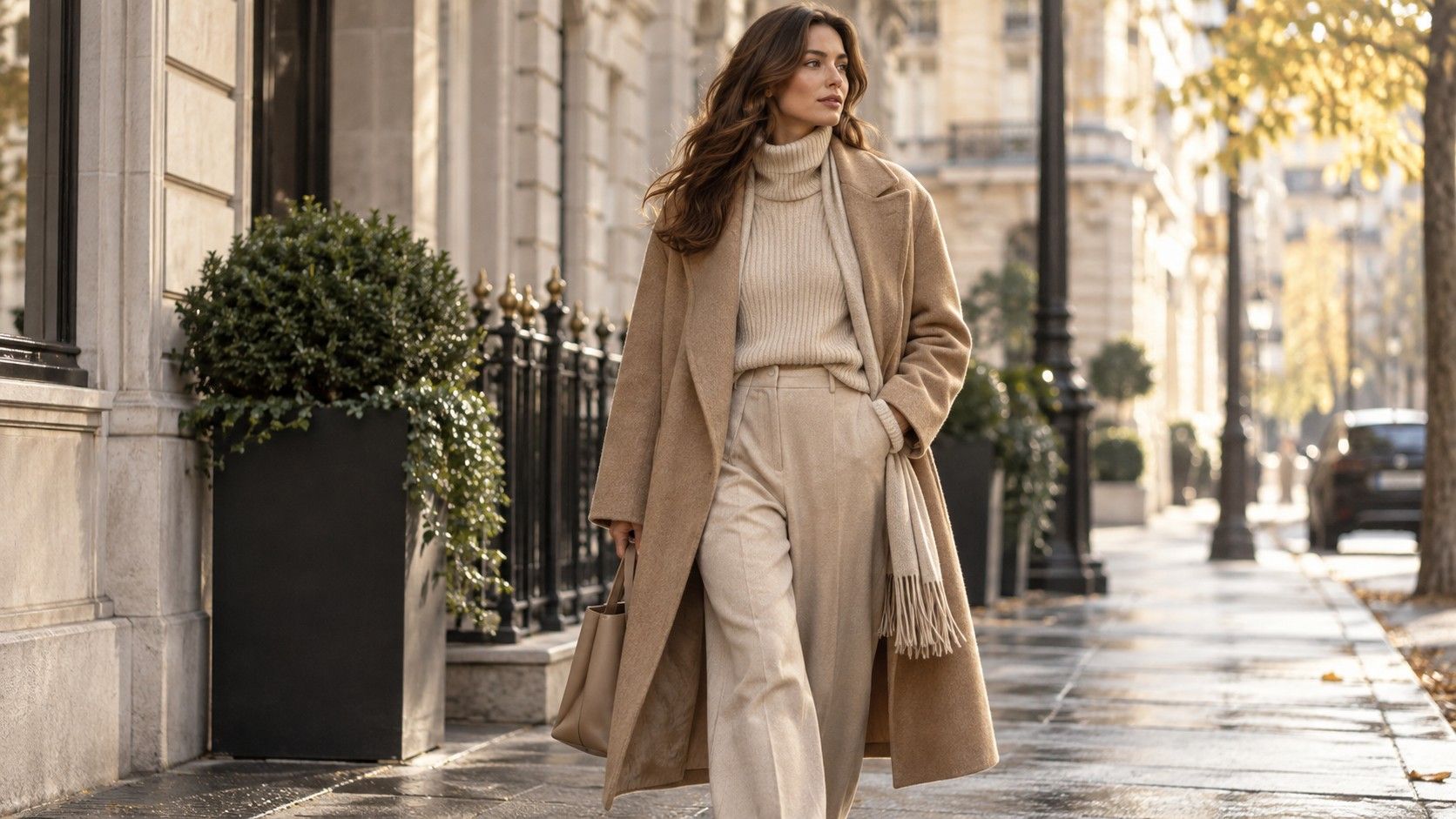
Hem lengths are a quiet tool. Let a shirt extend below a shorter knit, show a fine layer beneath an open jacket, or choose trousers that end cleanly above the shoe. These small breaks create rhythm in a tonal outfit. Check the full silhouette from the side, especially with long cardigans and coats. A piece that looks elegant standing still can add a bulky vertical column once you start walking.
Add contrast through accessories, not panic purchases
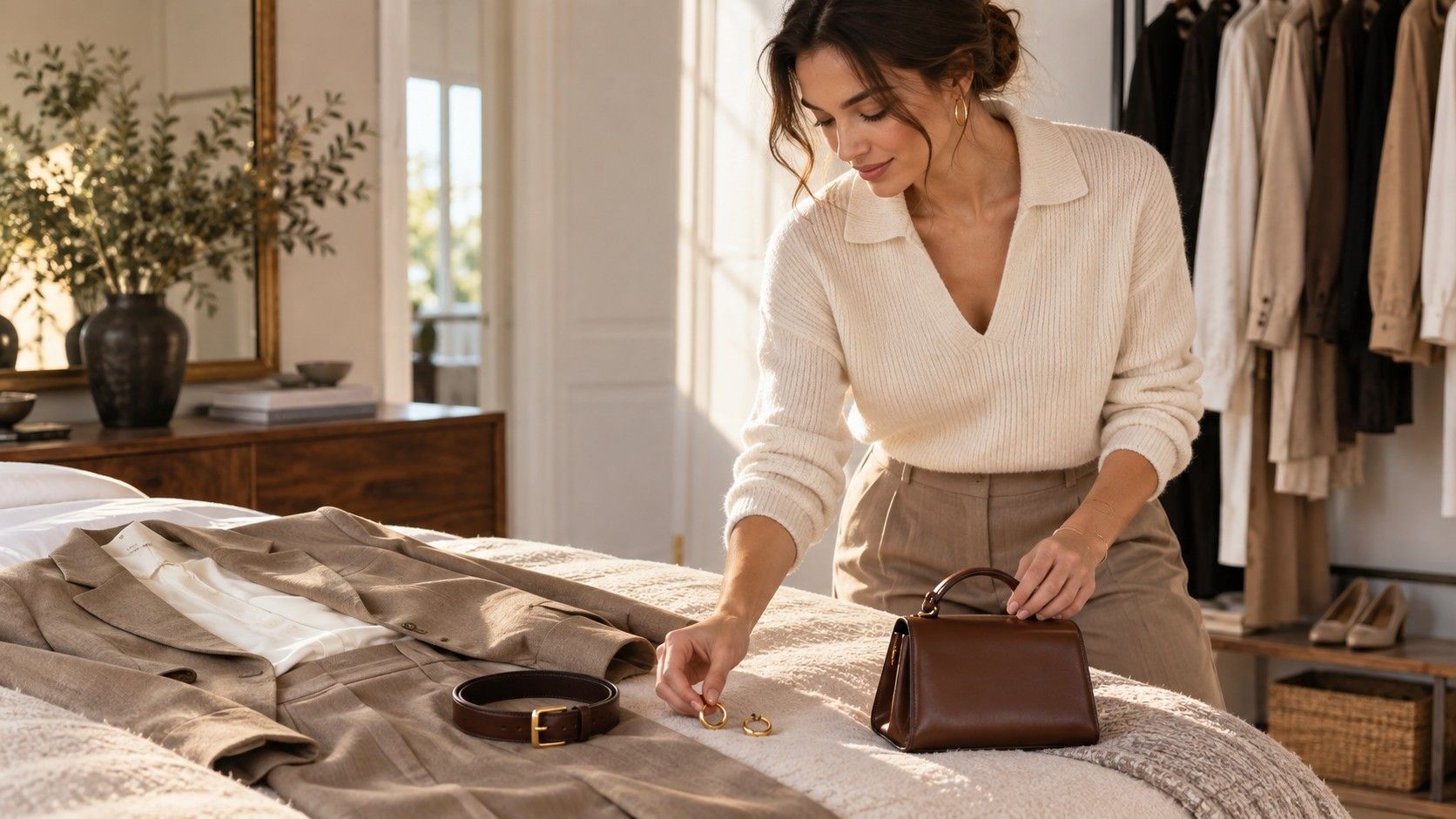
Accessories can create a boundary without abandoning the colour story. Brown leather with navy, black with grey, and muted gold with cream all add a useful edge. The accessory does not need to match exactly; it should look chosen. A belt can give a pale outfit a centre, while dark shoes can stop a long cream trouser from floating into one blank line. If you prefer minimal dressing, a bag with a different texture may be enough.
Use contrast sparingly. A bright red shoe, colourful bag, patterned scarf, and statement necklace all at once turn tonal dressing into something else. Pick the place you want the eye to land. On a busy workday that may be a structured bag; at dinner it may be a shoe or earring. The restraint is what makes monochromatic outfits feel easy rather than carefully staged.
Fix the mistakes that make monochrome feel flat
The common mistake is treating “one colour” as “one identical fabric and one loose silhouette.” Another is choosing a shade that makes you feel washed out and trying to rescue it with more makeup or accessories. Move the difficult shade away from your face, or pair it with a deeper version of the same family. A cream trouser with a camel knit is often kinder than cream from collar to ankle. In navy, a lighter blue shirt can make the darker jacket look more defined.
| Colour family | Easy variation | Useful contrast |
|---|---|---|
| Navy | Ink knit with denim | Brown leather or white sneaker |
| Cream | Oatmeal knit with ecru trousers | Suede shoe or dark belt |
| Grey | Silver tee with charcoal wool | Black boot or textured bag |
A good one color outfit should look simple because the decisions happened quietly: nearby shades, different surfaces, a clear line at the waist, and one controlled contrast. Start with navy, grey, or cream, wear it for an ordinary day, and adjust from what you actually notice. Tonal dressing becomes useful when it reduces decisions without erasing your style.
Wear the experiment on a day with errands, meetings, and changing light rather than judging it in a bedroom mirror. Notice where the outline disappears, whether the shoes feel too abrupt, and which material starts to look tired first. Those observations are more useful than a rule about the right shade. With repetition, monochromatic outfits become a practical default for mornings when you want to look pulled together without constructing a complicated colour story.
Do not reserve this approach for a special occasion. Try it with familiar jeans, a knit, and a coat first, then learn which near-shades work in your own daylight. The confidence comes from seeing that the outfit holds together through a normal day, not from copying a perfectly styled image with no commute, weather, or real chair involved.