Smart casual is frustrating because it sounds precise while leaving plenty of room to get it wrong. The useful version is not a shopping list of blazers and white sneakers. It is a way of combining one or two relaxed pieces with enough structure that you look considered in a café meeting, a casual office, or a dinner where jeans are welcome but gym clothes are not. The aim is ease with a clear point of view, not an imitation of formalwear.
Read the room before you build the outfit
The same navy trousers can look right at a creative studio and oddly stiff at a friend’s garden lunch. Start with the practical clues: will you be on your feet, indoors under strong air conditioning, walking from a station, or sitting across from a client? A smart casual dress code usually means the venue wants you to look present, not ceremonial. If people say “come as you are,” look at the time and the occasion instead of treating that phrase literally. An evening reservation, a work presentation, and a weekend gallery visit all ask for a different amount of polish.
Pair one relaxed piece with one structured piece
It helps to decide which item carries the message. A softly tailored jacket can make straight-leg jeans feel intentional; a crisp shirt can do the same work with wide-leg trousers. Once one piece is clearly structured, the rest can relax. That is why a knit polo, clean T-shirt, or fine crewneck works better here than a shirt with lots of fussy detailing. The outfit has one quiet anchor rather than five competing ideas.
Let fabric make casual clothes look deliberate
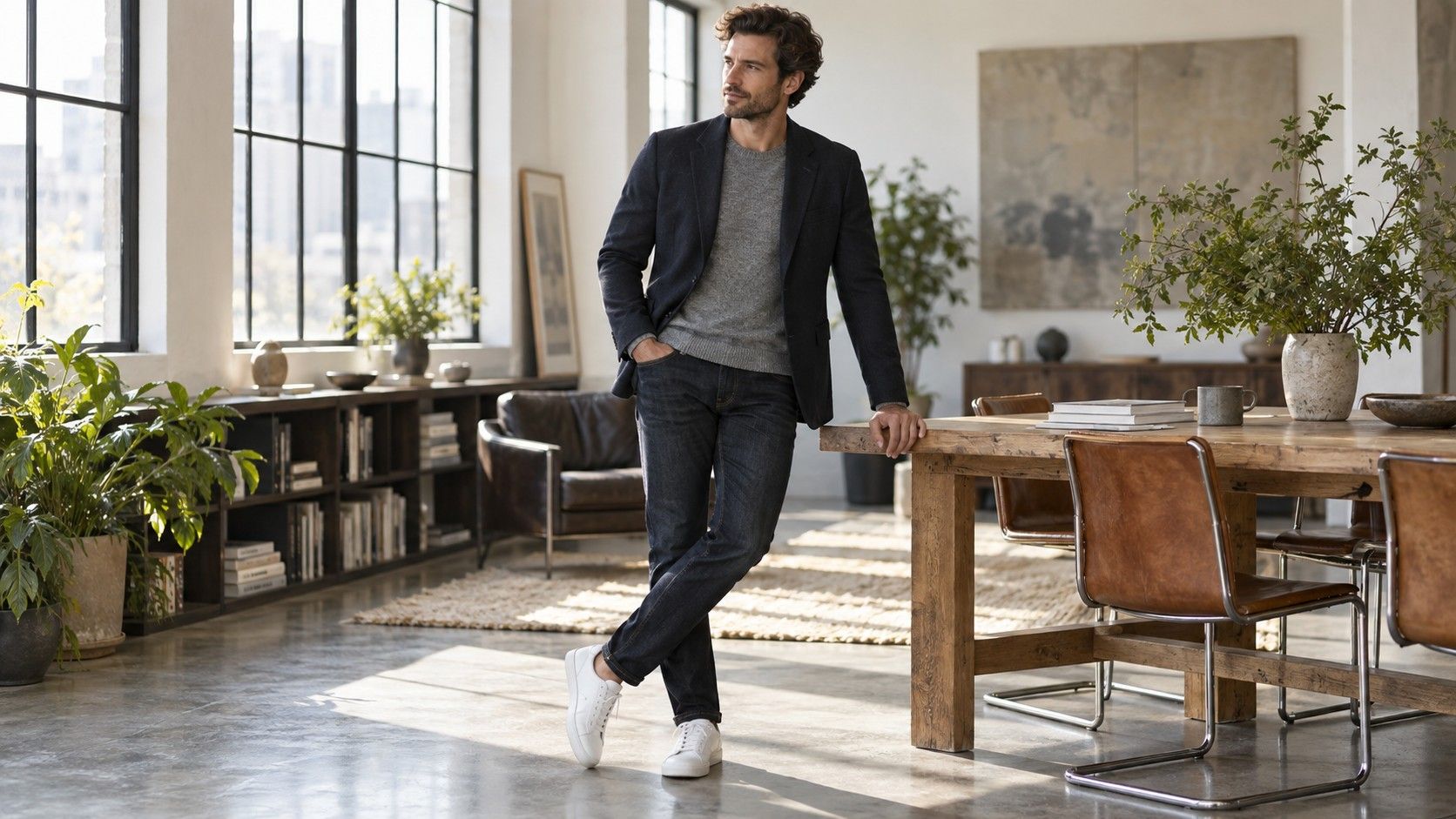
The simplest smart casual outfits are built from contrast. Try dark, unfaded jeans with a blazer and a plain knit, or tailored trousers with a washed cotton shirt and low-profile sneakers. The pieces do not need to be expensive, but their condition matters: a stretched collar, shiny knees, or trousers that bunch on the shoe will pull the whole look toward careless. A good fit through the shoulder and waist is more useful than a complicated silhouette. If the jacket feels borrowed or the trousers need constant tugging, people notice the discomfort before they notice the styling.
Keep the contrast measured. A roomy overshirt over a fitted tee and pleated trousers can work because the trousers give the shape a boundary. Oversized jeans, an oversized hoodie, and large trainers usually read as fully casual because nothing adds definition. At the other extreme, a sharp suit jacket, shiny belt, and stiff shirt can make casual sneakers look like a last-minute apology. Smart casual lives in the middle: relaxed fabric, clean lines, and enough space to move.
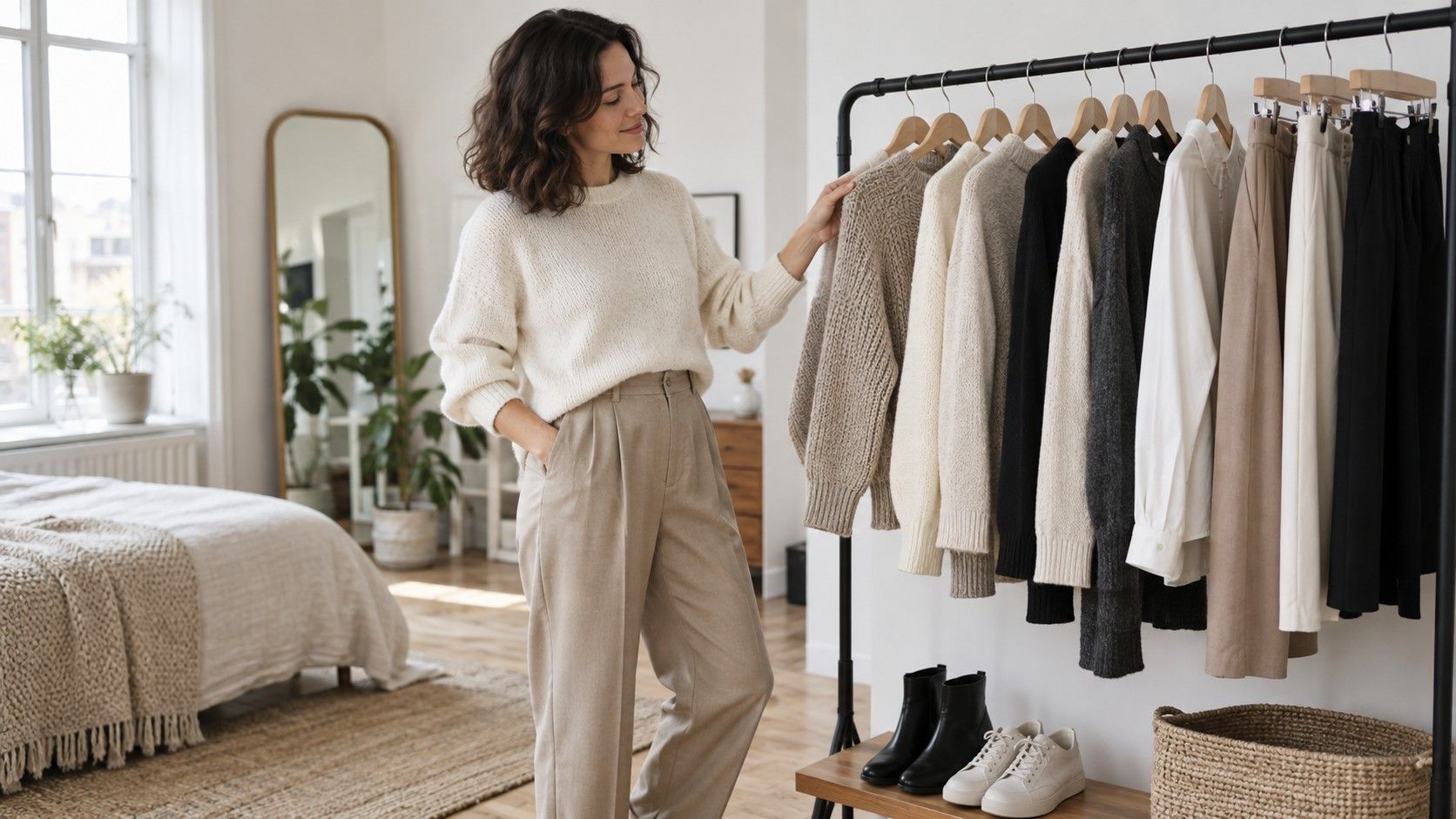
Texture is the quiet advantage in this kind of dressing. A merino crewneck, brushed cotton overshirt, linen-blend trousers, suede loafer, or dense jersey T-shirt has enough surface interest to make simple colours feel rich. Smooth synthetic fabrics can look flat under office lights, especially when every item is black or navy. Mixing matte denim with a textured knit and a twill jacket gives the eye something to register without turning the outfit into a display of trends.
Season matters more than fashion rules admit. In warm weather, a linen shirt with tailored cotton trousers is cooler and more convincing than a heavy blazer worn out of duty. In colder months, a fine-gauge knit under an unstructured jacket gives warmth without the padded look of a bulky sweatshirt. Check the fabric in daylight before leaving. Some pale trousers become more transparent than expected, while a very thin knit can cling and make an otherwise easy outfit feel overworked.
Choose shoes that match the level of effort
Shoes often decide whether an outfit lands. Clean leather sneakers, suede desert boots, loafers, minimal ankle boots, and neat ballet flats all bridge casual and polished clothing because they have a calm shape. Running shoes can be excellent for commuting, but their technical sole and bright details often interrupt tailored trousers. If comfort is non-negotiable, choose a sneaker with a simple upper and change only if the day genuinely calls for it; there is no prize for suffering through a meeting in shoes that pinch.
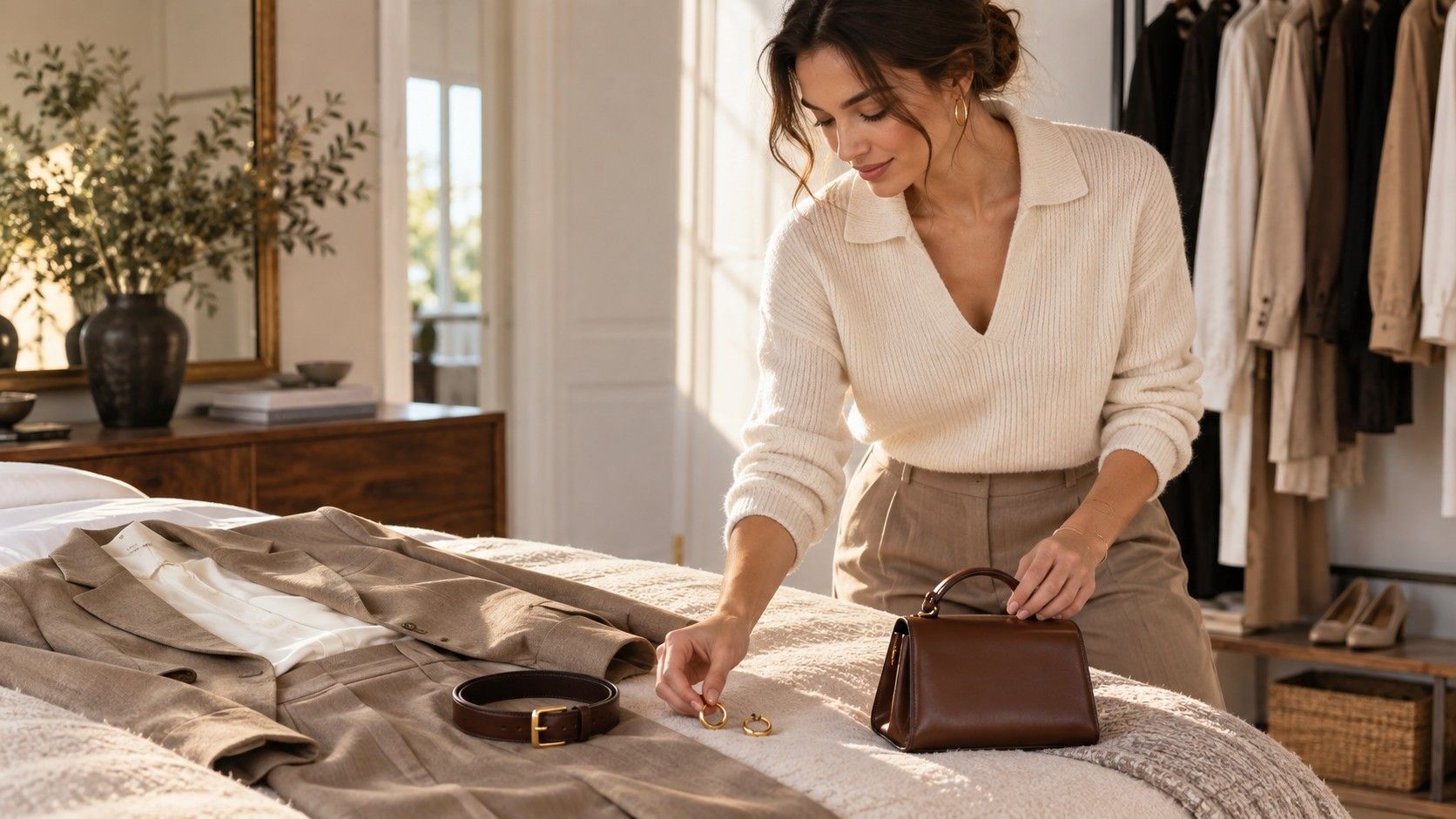
Before leaving, look at the hem and shoe together in a mirror. Cropped trousers need a shoe that feels intentionally visible. Full-length trousers need enough structure at the toe to avoid pooling into a shapeless line. This small check prevents the familiar situation where everything looked good on a chair but awkward once you started walking. A belt, watch, or small leather bag can repeat the shoe’s tone, though matching every item exactly tends to look dated rather than polished.
Take one outfit from daytime to evening
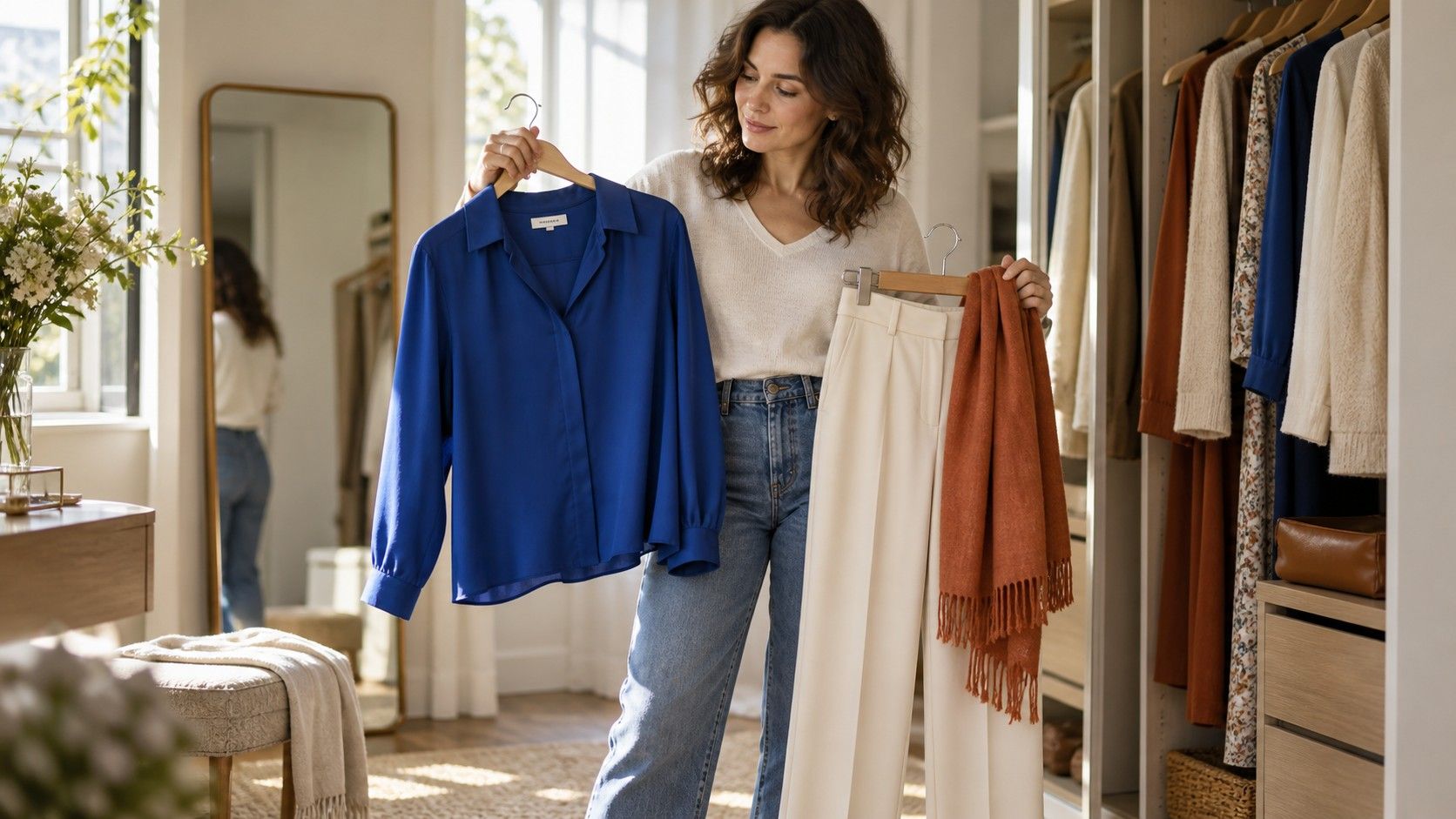
A dependable day-to-evening formula starts with a plain base: dark jeans or trousers, a fitted knit or shirt, and shoes you can walk in. Add an unstructured blazer, a short coat, or a refined overshirt for the daytime. When plans extend, remove the work tote, change into a smaller bag if you have one, and let one element become slightly more expressive: a deeper lip colour, a patterned scarf, a pendant, or a textured jacket. The outfit changes mood without requiring a complete second set of clothes.
The most convincing smart casual outfit is usually the one you stop thinking about after breakfast. It respects the setting, gives you a comfortable range of movement, and has a few clear lines rather than a pile of styling tricks. Build a small rotation around trousers or jeans that fit well, useful knitwear, one relaxed jacket, and shoes you keep clean. From there, smart casual outfit ideas become less about decoding a vague label and more about recognising what already works together.
Keep a quick repair routine too: steam a shirt, brush lint from knitwear, wipe sneaker soles, and replace a loose button before it makes a useful piece feel neglected. Those details make relaxed tailoring look purposeful. They also mean that your dependable jacket, trousers, and shoes remain available when an invitation arrives with an unhelpfully vague dress code. A small wardrobe with care behind it reads more confidently than a crowded rail of almost-right options.