Wardrobe essentials are not the pieces everyone says you should own. They are the clothes that keep turning up in outfits because the fit is right, the fabric suits your routine, and they get along with the rest of the closet. A useful basic earns its place in the slightly unglamorous moments: a rushed morning, a sudden rain shower, a meeting that runs late, and the day after laundry.
Look for gaps before you look for a checklist
Start by pulling out the clothes you wore in the last month, including the things currently draped over a chair. Those are your active wardrobe basics. Notice where an outfit breaks down. Maybe three tops work with jeans but none with your tailored trousers. Maybe your favorite knit needs a layer that is neither a bulky coat nor an indoor blazer. These gaps are much more valuable than a generic list that tells every person to buy the same white shirt.
Choose fit before trend or category
Photograph a few outfits you genuinely wear, then draw lines between pieces that meet easily. You will quickly see the lonely items: the jacket with the wrong sleeve width for every knit, the trousers that only work with one shoe, the top in a color that ignores all your outerwear. A versatile clothing piece should connect to several others. That does not make it boring. It gives you a stable base for the more particular things you enjoy.
Let fabrics cooperate across the same day
A shirt, trouser, or jacket only becomes an essential if you can move through a normal day in it. Test trousers seated as well as standing, because a waistband that looks fine in a fitting room can become a constant negotiation at lunch. Test a jacket with the knit you wear most often, not with the thin store top underneath. Raise your arms, carry your bag, and look at the shoulder seam in a mirror from the side.
Good fit is not always perfectly tailored fit. A deliberately relaxed shirt can be useful if it layers cleanly and does not swamp your proportions. A close-fitting tee can work under jackets if it does not pull at the neckline. The key is consistency: know what shapes make you feel comfortable and visible, then use that knowledge when you replace an item. Trend changes are easier to accommodate when the underlying fit is reliable.
Fabric is why two pieces with compatible colors may still feel wrong together. A crisp poplin shirt, soft merino knit, rigid denim, and polished leather shoe each have a different level of structure. That can be interesting, but too many competing textures create the sense that an outfit was assembled in the dark. Aim for one or two clear textures, then let the rest support them. A chunky knit often looks better with simple trousers and smooth boots than with a heavily distressed jean and a rough canvas jacket.
Practical fabric care matters too. If every top needs delicate washing but your weekly routine is one mixed load, the wardrobe is working against you. Keep enough washable cotton jersey, denim, wool blends, or easy-care knits for the pace of your week. An essential with demanding care can still deserve a place, but it should offer something distinct: exceptional warmth, a formal finish, or a silhouette nothing else provides.
Make neutral outfits less predictable with depth
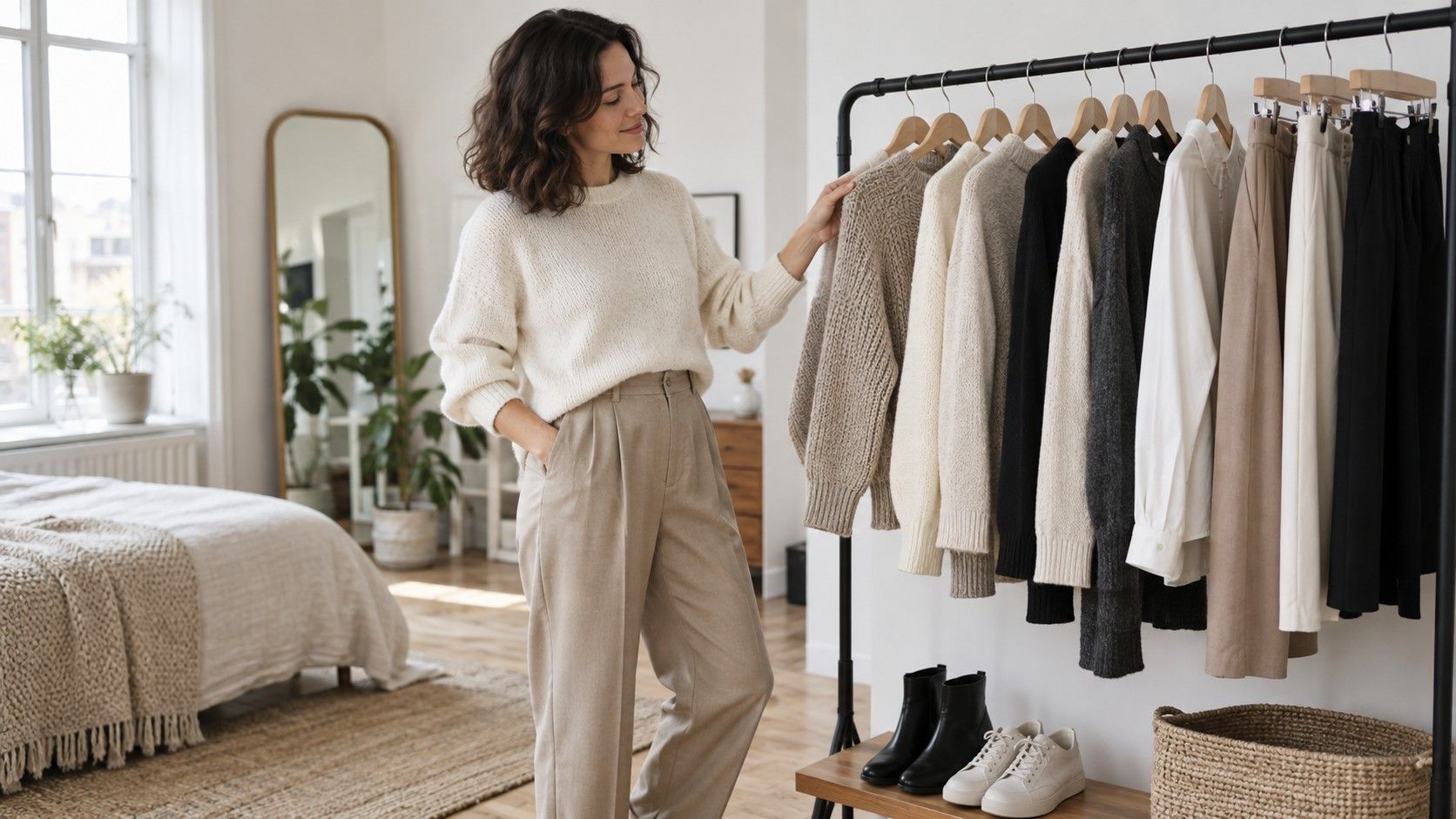
Neutrals work together when they differ enough in depth or texture to avoid becoming a blur. Navy with cream is clear; charcoal with pale blue is calm; brown with ecru feels grounded. Black and navy can work, but they usually need a visible contrast in fabric, such as matte denim with a fine knit, or a lighter layer between them. Do not assume all beige, grey, and black items are automatic friends just because they are labelled basics.
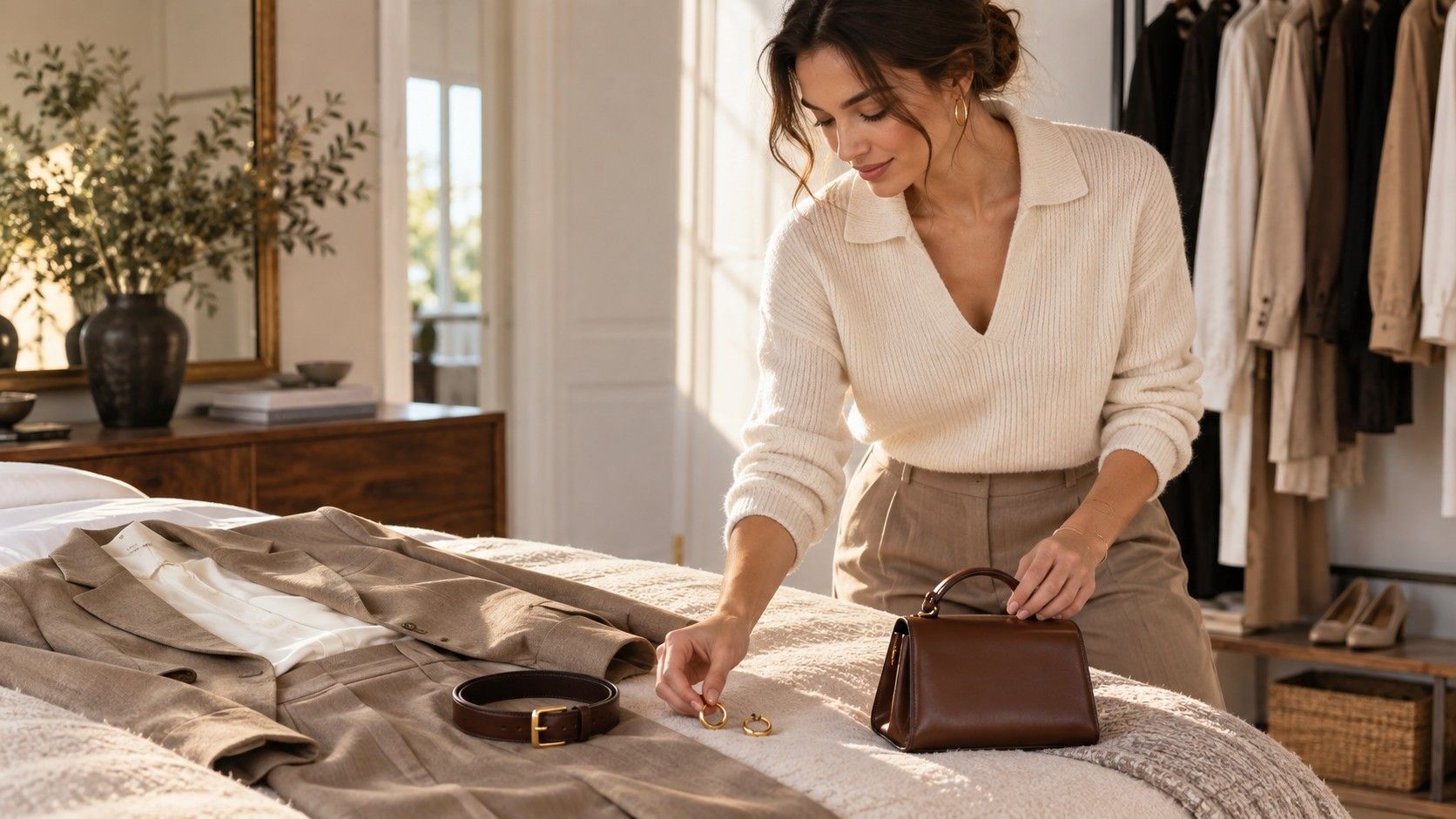
Use one small recurring accent to make the wardrobe feel personal. It might be burgundy socks, a forest-green scarf, silver jewelry, or a cognac belt and shoe. Repetition lets the accent connect outfits without creating a uniform. It also makes shopping clearer: a new top does not need to match every color you own, but it should work with your chosen neutral base and at least one repeated detail.
Give trousers, knitwear, and jackets specific jobs
A good trouser rotation usually includes at least two different jobs: a comfortable everyday pair and a pair that looks more structured without becoming fragile. Jeans can cover one job, while straight wool-blend trousers or a wide-leg cotton pair cover another. Check the hem against every regular shoe. A trouser that only works with one boot is less versatile than it first appears, especially when weather changes.
Knitwear and jackets should add layers without duplicating each other. A fine crewneck works under a blazer; a cardigan can replace the blazer indoors; an overshirt or chore jacket can give a tee more shape. Try each layer over two tops and with two bottoms. If it only works in one exact combination, enjoy it as a specialist, but do not let it consume the budget meant for closet basics that need to work harder.
Know when an essential is not essential for you
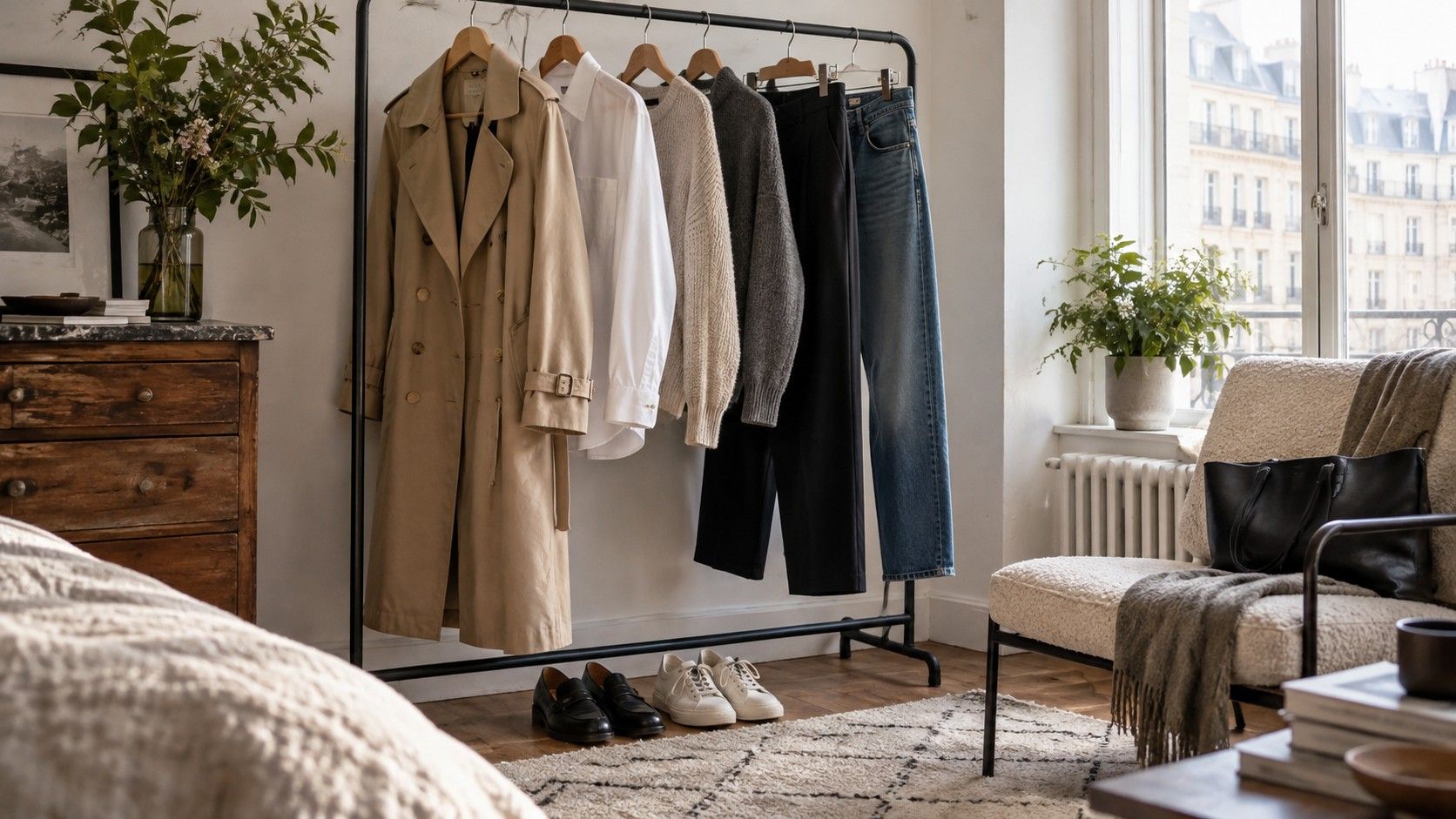
The white shirt, trench coat, black blazer, or minimalist sneaker can be useful, but none is compulsory. If you hate ironing, a crisp cotton shirt may be an occasional item rather than a core piece. If your climate is windy and wet, a water-resistant parka may earn more cost per wear than a trench. If black makes you feel severe, navy, brown, or deep olive can perform the same organizing role in your outfits.
Review essentials after a season rather than judging them on the first week. The useful items will show wear in the honest places: washed cuffs, soft knees, scuffed soles, a repaired button. That is not failure. It is proof they are participating. Replace or mend the pieces that make combinations easier, and be less sentimental about the impressive item that never seems to leave its hanger.
| Piece | What makes it versatile | Warning sign |
|---|---|---|
| Trousers | Work with several shoes and three or more tops | Need one exact heel or belt |
| Knitwear | Layers under a jacket and washes realistically | Pills, overheats, or only suits one bottom |
| Jacket | Fits over your common sleeves and bags | Looks good only with the store outfit |
| Shoes | Match common hems, weather, and walking | Require a special route or occasion |