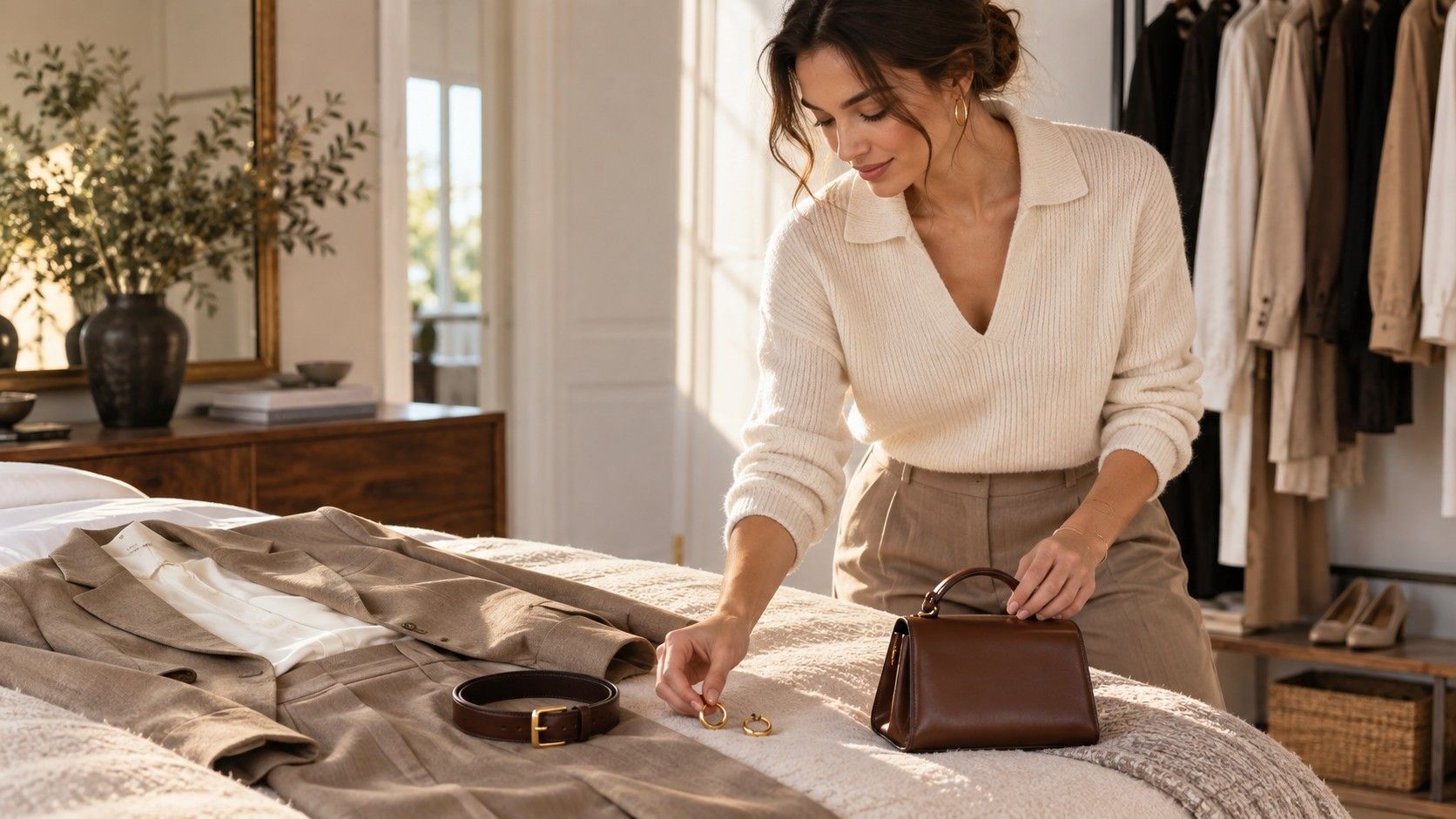
A useful office wardrobe should make a Tuesday morning easier, not produce seven near-identical versions of the same outfit. Many people end up with a private uniform because they have found one safe formula: black trousers, one top, one cardigan. There is nothing wrong with that formula, but it becomes limiting when every meeting, commute, temperature swing, and after-work plan is treated alike. Variety comes from a small system of shapes and layers, not from buying a different statement piece every week.
Learn the real dress code, not the theoretical one
Most workplaces have two dress codes. The written policy may say business casual, while the practical code is set by the person leading a meeting, the client-facing team, and the temperature of the office. Spend a week observing shoes, denim, sleeves, and how people dress on presentation days. A dark pair of jeans may be normal at a design agency but distracting in a conservative finance office. A blazer may signal authority in one team and make you look as though you are interviewing in another.
Build a weekday base you can repeat differently
Keep a slightly sharper option ready for days with visitors or a formal conversation. It can be a tailored trouser, a pressed shirt, a structured knit, or a midi skirt with a neat shoe. The point is not to be overdressed every day; it is to avoid treating a high-stakes morning as a surprise. Checking your calendar the night before gives you time to choose rather than reaching for the same emergency outfit at 8:10.
Rotate shape and colour instead of buying more clothes
Start with three or four bottoms that genuinely earn their place: perhaps navy straight trousers, charcoal wide-leg trousers, dark denim if allowed, and a midi skirt in a fabric that does not crease the moment you sit down. Add tops that work across at least two of those pieces. A fine knit, striped cotton shirt, ribbed tee under a cardigan, and soft blouse can all play different roles without demanding a huge wardrobe. If every top only works with one bottom, getting dressed becomes a puzzle instead of a routine.
Fit is the part worth altering. Trousers that catch at the hip or drag along wet pavement become unworn even if their colour is useful. A skirt that climbs when you walk to the train is not a practical work staple. Try the sitting test, the reaching test, and the coat-on test at home. Office wardrobe pieces spend long hours around desks, lifts, buses, and lunch queues; a garment that only looks good while standing still will feel like a poor bargain by Thursday.
Business casual outfits look more varied when the silhouette changes. One day might pair a fitted knit with wide-leg trousers; another, a relaxed shirt with straight trousers; another, a cropped cardigan with a high-waisted midi skirt. The colours can stay close: navy, cream, grey, olive, burgundy, and soft blue mix easily while preventing the all-black blur that makes a week feel repetitive. Choose one deeper colour and one lighter neutral in each outfit so there is a visible line between top and bottom.
Use a small accessory shift rather than treating accessories as decoration. A slim belt can define trousers with a tucked knit; a scarf can soften a simple shirt; a structured bag can steady a more relaxed cardigan. Avoid saving every interesting item for Friday. Wearing a good jacket with plain trousers on an ordinary Wednesday is often more useful than owning it for the two occasions when you think it is special enough.
Dress for the commute and the office you actually have
A work outfit does not begin at your desk. Rain, crowded transport, a twenty-minute walk, and an office that runs cold all change what is sensible. Think in removable layers: a light base, a cardigan or overshirt, and a coat appropriate for the journey. This is more effective than wearing one thick item you cannot adjust once the heating is on. Keep commuter shoes practical and carry a cleaner pair only if the route truly makes it necessary.
Fabric deserves a quick reality check. Linen may be perfect for a short summer day but awkward after an hour on a train. Very fine jersey can show every fold from a chair. Wool blends, cotton poplin, ponte, denser knitwear, and washable viscose often survive a normal day with more dignity. Test a garment after sitting, not only under a fitting-room mirror. The crease pattern tells you more than a sales tag does.
Keep a small rescue system for busy mornings
A rescue system is not a fantasy capsule of twenty perfect items. It is a short list of combinations you know work when laundry is unfinished or a meeting appears at the last minute. Photograph three or four successful work outfit ideas in daylight and save them in one album. Include the shoes, outer layer, and bag, because those are the pieces that often create the morning hesitation. On a rushed day, choose the picture rather than reopening the whole wardrobe debate.
| Situation | Reliable base | Useful adjustment |
|---|---|---|
| Client meeting | Tailored trousers and fine knit | Add a structured jacket and clean leather shoes |
| Long commute | Soft trousers and washable top | Use layers and weatherproof footwear |
| Casual Friday | Dark denim and shirt | Keep one polished element, such as loafers or a blazer |
Work clothes become less uniform when you stop asking every item to be exciting on its own. A useful office wardrobe has steady foundations, a few changes in proportion, and enough respect for your actual commute to survive a full day. That approach creates business casual outfits with personality while keeping the morning decision pleasantly boring.
Review the system every few months instead of assuming a difficult item will become easier. If a blouse needs special ironing, a skirt only works in one season, or a jacket never fits over your commute layer, stop giving it prime space. The gap it leaves is useful information. Replace it only when you can name the job a new piece must do, such as covering presentation days or making a reliable trouser feel less repetitive. That is how an office wardrobe develops without becoming another uniform.